Showing posts with label Bugatti. Show all posts

12/8/10

2006 Bugatti Veyron W16 Engine

Auto Car | 2006 Bugatti Veyron W16 Engine | The trials of the fastest road sports car in the world have been successfully completed. One of the most ambitious projects in automobile history is entering its production phase. The first Bugatti Veyron 16.4 cars, built mainly by hand, are already being completed and will be delivered to customers this year.

The sports car, capable of more than 400 km/h, is driven by a 16-cylinder mid-engine, that at 710 mm long is no larger than a conventional V12 unit, and due to its lightweight construction weighs only about 400 kilos. Its compact dimensions are due to the unique arrangement of its cylinder banks in a W configuration. Two VR8 blocks, each with a fifteen degree bank angle, are joined in the crankcase to form one engine. Both eight cylinders are set at an angle of ninety degrees to each other and are aspirated by a total of four exhaust gas turbochargers. The engine delivers 1001 HP at 6,000 r.p.m. and provides a maximum torque of 1250 Newtonmetres at between 2,200 and 5,500 r.p.m.

To apply the power of the 64-valve unit to achieve satisfactory driving dynamics both in everyday traffic and on the racetrack, the Bugatti development team of Dr. Franz-Joseph Paefgen and Dr. Wolfgang Schreiber has realized a propulsion unit that is without parallel in its complexity. If the extreme engine power is a master stroke of genius, its conversion for road use is an equally tough challenge. As Dr. Schreiber says “For 1000 HP propulsion power, the system demands approximately 2000 HP to be additionally generated as heat energy during combustion. Half in each case is dissipated in the exhaust gas and cooling water”.

To do this, the Bugatti engine has two water circuits. The larger of the two with 40 liters of coolingwater has three coolers in the front section of the car, to keep the engine at operating temperature. The second circuit, called the low-temperature system, has a separate water pump and contains 15 liters of cooling water. These are used to cool, by up to 130 degrees, the charged air, heated during compression in the turbochargers, in two heat exchangers mounted on the engine. The cooled, charged air then passes through two “air manifolds” into the combustion chamber, which it then leaves as exhaust gas at approximately 1,000 degrees. It then passes through the turbines of the exhaust gas turbochargers. This causes the exhaust gas to expand, so that it is cooled by up to about 150 degrees, is then cleaned in the catalyzer and exhausted.

In addition to its unique compactness, the high performance of the power unit is the centrepoint of the development. Lightweight materials are used that not only result in a low power-to-weight ratio but also particularly provide the spontaneous response of the moving engine-internal masses. In addition to piston rods of titanium, the so called “easy runners”, the eight-stage oil pump integrated into the crankcase for dry sump lubrication has light aluminum gears. Because the arrangement of the 16 cylinders ensures extremely quiet running, only a small flywheel is needed. The use of motor sport technology is evident not only from the plasma-coated running faces of the cylinders but also by the use of high-strength steel for the shafts and gears in the aluminum crankcase.

Unique in engine design is the integration of knock and misfiring detection in an ion current system. Because the multiplicity of cylinders means very quiet running and ensures that the velocity difference will be extremely small in the event of a cylinder misfire, cylinder-selective detection by measuring rough running is not reliable enough. Therefore, Bugatti Ion Current Sensing (BIS) is used. The ion current flowing at each spark plug at the timepoint of ignition is monitored by a separate evaluation sensor system. The data obtained is passed to both engine control units. If knocking combustion or a misfire is detected, the associated control unit immediately initiates countermeasures, such as retardation of the ignition timepoint, shutdown of the cylinder or reduction of the charge pressure. According to the head of Bugatti Unit Development Gregor Gries, “The aim of our technology is to generate the maximum performance from the engine in a stable, clean manner”.

The power generated in the engine is transferred to the flange-mounted direct manual gearbox (DSG). The torque and speed is then transmitted, through the gearing of seven forward and one reverse gear, via a universal drive to the front axle gearbox and via a second universal drive, along the right side of the engine to the rear axle gearbox. Both the DSG and both axle gearbox housings are of lightweight aluminum construction. The drive power is distributed to the front and rear axles by means of a Haldex coupling, an actively-controlled multi-disk, inter-axle lock directly connected to the front axle gearbox. The following front axle differential distributes the power to both front wheels. In the rear axle differential the power is distributed to the rear wheels via a bevel gear and a further differential. In addition, an actively-controlled, hydraulically-actuated, multi-disk differential lock is installed here. When necessary, it prevents speed differences between the rear wheels and ensures optimum directional stability when accelerating and when cornering under load. All load distribution functions are completely automatic and are undetected by the driver.

The Bugatti marque has since earliest times been regarded as a central force in the advancement of automobile development by innovative solutions. A position deservedly maintained by the first high-performance sports car of the modern Bugatti.

Source : forums.finalgear.com
Read More..

2008 Bugatti EB 16.4 Veyron "Pur Sang"

Auto Car | 2008 Bugatti EB 16.4 Veyron "Pur Sang" | Visitors to the Atelier in Molsheim are always intrigued to see the Bugatti Veyron's high-tech components being meticulously assembled into an automotive work of art. Watching the car coming together, coupled with an admiration for the technical beauty of its structure, gave the designers the idea of finishing the car in its pure material configuration - meaning no color coating. The result is the EB 16.4. Veyron "Pur Sang", a two-tone study of pure materialness showing the car's true essentials: carbon and aluminum.

The carbon monocoque holds the engine plus the passenger cell, while the polished aluminum panelling is enhanced by reflections in the sculpted bodywork. Interestingly, the rawness of the materials even more strongly highlights the dual character of this car: performance power coupled with cruising comfort, structure and body, dark and light.

A closer look at the details reveals the technical logic behind this stylistic appearance. The sophisticated monocoque contains all the core structural components, including the W16 engine, the passenger cell, the crash box and the linkages to the wheels. It is this purpose-driven fundament that is visible as the center of the car in clear-coated carbon fiber.

Equally consistent is the use of the aluminum paneling. This lends shape and a unique body sculpture to the car, covering the wheels in a muscular and powerful expression by way of elaborately shaped fenders. Highly polished, these perfectly tensioned shapes strongly visualize the fascinating surface reflections that define every Veyron.

The balanced graphic appearance is also visible when looking down onto the car from above. These qualities take on a distinct appearance - almost like that found in a Mondrian painting. As its pur sang label suggests, this individualized customer car shares the same kind of DNA as that of classic cars from the Bugatti past: the "Atalante", the Type 55, the Type 41 "Royal" all had an unmistakable and characteristic graphic signature. It is this precise division of performance components and body paneling - in this form - that makes the EB 16.4. Veyron "Pur Sang" unique in the supercar world.

Do you dream about cars that are somewhat exclusive? About one of the fastest cars on this planet? You don’t know what to do with your money? If you answered “yes” in all cases, we have something exactly for you. It’s the Bugatti Veyron. But not your typical Bugatti– it’s a special edition of only 5 cars! Its name is the Bugatti EB 16.4 Veyron Pur sang.

This is the limited edition that differs at the first sight from the ordinary version. It’s unique with its exterior, because it is almost impossible to improve the perfect interior and engine. The engineers have decided to build the whole chassis of only two materials – a special aluminum alloy and carbon fiber. This chassis is buffed to the highest gloss without any paintwork.

About the engine – nothing has changed, except thanks to aftermarket materials the car is now about 100kg lighter – now at 1888kg. So it’s about 1.88kg/hp in case of 1000hp under the hood.

The Bugatti engineers have built a car that can be more attractive than the “normal” Bugatti Veyron. And how you can own it? All 5 models were sold in the first 24 hours, so you’ll have to hope one of the lucky owners are deciding to sell it.

Source : www.rsportscars.com
Read More..

2008 Bugatti 16.4 Veyron Sang Noir

Auto Car | 2008 Bugatti 16.4 Veyron Sang Noir | The Sang Noir has a special edition version from the Bugatti 16.4. Veyron has given its share to the legendary Bugatti Atlantique 57S. Different from the Veyron, Veyron has included a black-themed exterior and a different grille, side mirrors, and new unique wheel with an orange interior.

Reaching 0-60 mph is no stranger to this car in less than 2.6 seconds, with a top speed of 253 mph. A new engine has been brought in called the Quad-Turbo W16 and a torque that has been weighed 922 lb-ft @ 2200 rpm.

The Bugatti Veyron is one of the most exclusive cars on the planet, with a price tag of $1,400,000 it hardly takes an Einstein to realise why. Every Veyron is built to order with a custom package as specified by the consumer and with this in mind we could easily argue the fact there will be 300 different special edition Veyrons on the street by the time the current generation production series ends.

Bugatti Veyron  Sang Noir was limited to just five units, up to 15 examples of the all-black Sang Noir will be built to appease Bugatti’s American customers who missed out on their chance to bid on the Pur Sang model during its European launch last year.

The EB 16.4 Bugatti Veyron Sang Noir is a special edition, created for the true automotive connoisseur. While its entirely black exterior may initially appear subdued, upon closer inspection it becomes clear that a select number of visual accents make this special Veyron just as vividly coloured as its brighter counterparts.

Similar to its thoroughbred predecessor, the Type 57S Atlantic, theBugatti 16.4 Veyron Sang Noir exposes a raptor-like DNA that is reflected throughout the entire model history of the marque.

Even the hand-stitched, all-leather interior of the EB 16.4 Veyron Sang Noir plays on the theme of a harmony of extremes. The light and confident Tangerine is offset by a black-piano lacquer finished centre console; both available exclusively to this edition. A dominant black tinted carbon fibre monocoque joins the elegant black body sides, which in turn are complemented by polished details.

The face of the Bugatti Veyron Sang Noir is instantly recognisable due to the iconic horseshoe grill, finished exclusively in chrome.

This striking and unparalleled harmony between luxury and sportiness is complemented by alloy-coloured details in the form of the chromed Bugatti grill and door-mirrors, as well as polished wheel surfaces and roof-rails. All-black front lights, air intakes, filler caps and door-handles naturally heighten the stunning effect of the racing-blue brake callipers.

Of the Bugatti Veyron Sang Noir 15 cars will be built and offered in Europe, the Middle East and the United States.

Source : www.luanpa.net
Read More..

2008 Bugatti Type 12-2 Streamliner Concept Design by Racer X Design

Auto Car | 2008 Bugatti Type 12-2 Streamliner Concept Design by Racer X Design | A few months ago Racer X Design released the sketches of the KC-427, which is currently being built and expected to be shown as a fully built car by the end of the year. The streamliner is not intended for production, and is just one of the many designs that Racer X Design have come up with.

Designed as an example of a luxurious four seater GT, the type 12-2 is the artwork of Reuben Zammit. The aim was to get the type 12-2 immediately recognizable, yet make a signature of it’s own for a specific marquee. A classic front engine rear wheel drive layout. The shape allows for a boot bigger than its rivals, yet keeping the lines flowing. The doors take a large part of the side and the roof for easier access.

The idea is to use a VW derived W12 engine with a twin turbo layout hence the name 12-2. Although not as extravagant as the W16 used in the Veyron, there would be enough power to propel the Type 12-2 to over 200 mph.

Racer X Design is a company that has designed and built some of the best show cars in the business winning first place awards in the XLR-8 live competition every time it competed with 4 different demo cars in 2 different classes for bodystyling.

“We are now offering various design services ranging from show car design to full concept car design to any individual whether he needs to modify a car for competition use, or companies looking for a design that can meet their needs.”End of Bugatti Type 12-2 Streamliner Concept Design by Racer X Design review.

Maltese designer Reuben Zammit designed the Streamliner as a 2+2 with "ample luggage space." Though we're sure if Bugatti ever created such a car it would be decidedly more expensive than the Ferrari 612, cues from Maranello's uber-GT can be seen in the Streamliner. But the nothing-but-curves approach gives it a Bugatti retro flair all its own. The car would use a twin-turbocharged version of the W12 engine and be powered by the rear wheels only. That would give the Streamliner rather un-Bugatti-like handling, which we think is even more reason to buy one. Check out additional renderings of the Streamliner 12-2 in the hi-res gallery below and let the designer know if you like his work in the comments.

The car is designed to be a four-seater GT although this is strictly a design study and there are no plans for production. The designer, Reuben Zammit, has certainly created something a bit shocking, although it seems a little derivative of other modern supercars rather than anything really groundbreaking. In terms of the engine, a VW-sourced W12 engine would be used with just two turbochargers (thus the 12-2 moniker).While the design study will remain pure fantasy, there’s no harm in imagining what could be if car designers really had their way. For other Veyron design studies check out our previous story on the Bugatti Wimille, a four-door sedan Veyron that should make getting to the shops a little more fun.

Source : www.auto-power-girl.com
Read More..

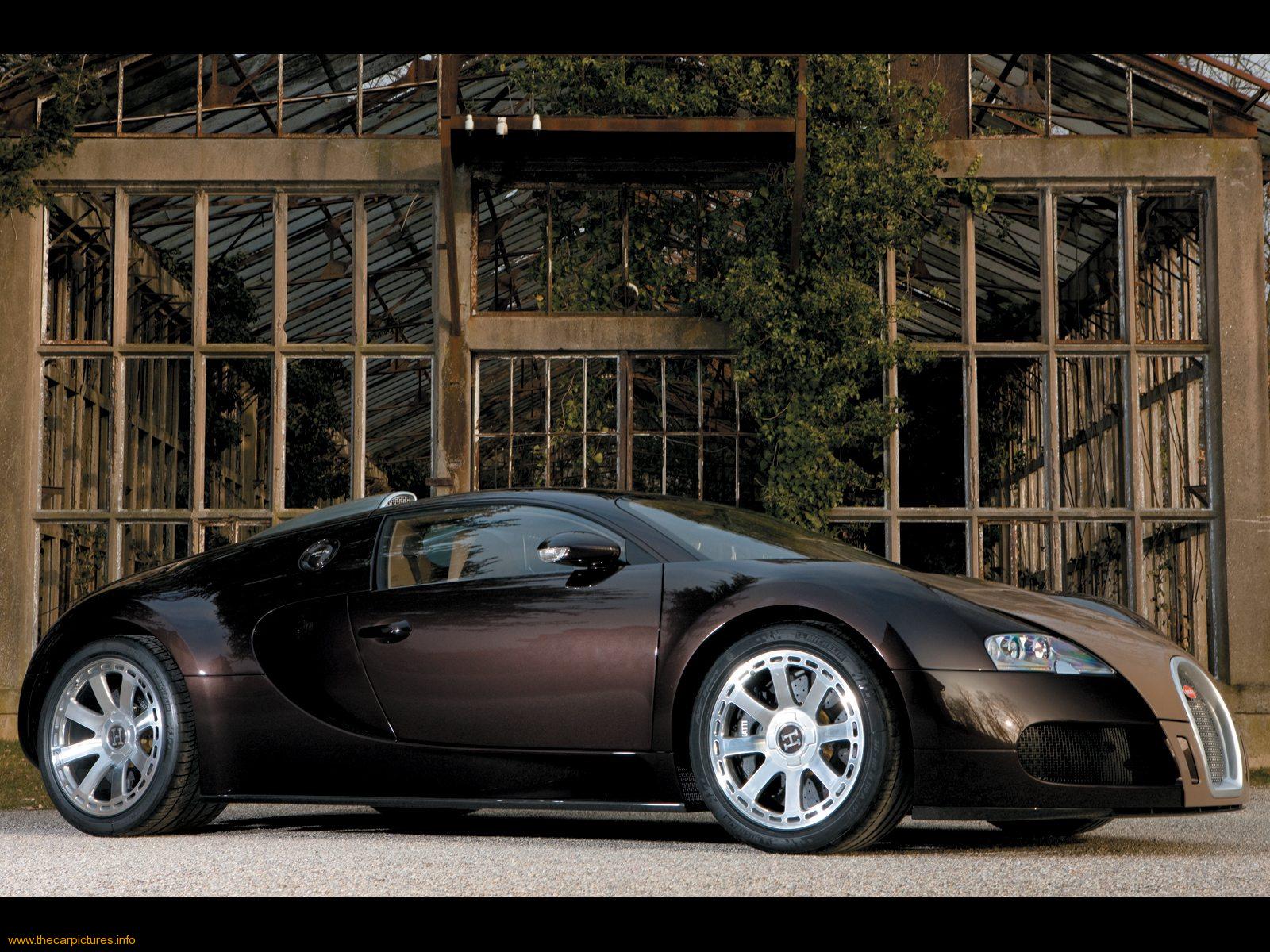
Bugatti Veyron Fbg par Hermès

Auto Car | Bugatti Veyron Fbg par Hermès | While I appreciate coveted designer handbags, my true passion lies in cars. Don’t blame me, I am a dude like any other. Just happen to administer a Purse Blog on the Interweb. About a month ago, I reported on Hermès’ upcoming collaboration with the luxury car manufacturer Bugatti. Finally, the beast was revealed at this year’s Genova Car Show – and oh my, it is a gorgeous specimen. While the exquisite Bugatti Veyron Fbg par Hermès boasts the same 1001 hp quad-turbocharged 16 cylinder engine from the original Veyron, its distinct character manifests in the details.

The new Veyron derives its name from the historic Hermès headquarters on the Rue du Faubourg Saint-Honoré, in the heart of Paris’ eighth arrondissement. It sports eight-spoked wheels in polished aluminum, central butterfly wheel locks branded with the prominent letter ‘H’, and air vents around the rims aim to reproduce the characteristic appearance of traidtional Hermès saddle-stitching. The horseshoe radiator grille, and the lateral ventilation grilles flanking it, are made from lightweight alloys with a design of interlocking H’s which evoke the Hermès signature. The inner surfaces of the Veyron Fbg are designed and sheathed in bull calfskin at the Hermès workshops in Paris by the same mastered hands that give us purse fetishists the coveted Birkin and Kelly bags.

The center console features a special compartment for the Hermès Globetrotter agenda, the leather-lined trunk holds a specially-fitted “Toile H” leather case. With a price tag of 1.55 million Euros (excluding taxes), the Veyron Fbg par Hermès will remain an unattainable subject of lust for most of us. The lucky, selected few will take their deliveries towards the end of this year. What an absolutely astonishing, most awesome and desirable vehicle, for car and bag fetishists alike.

1956 saw the last Molsheim-built Bugatti pass through the factory gates of the famous Alsatian car manufacturer. Fifty years later, in the spring of 2006, the first of the new generation of Molsheim Bugattis, the Bugatti Veyron 16.4, was delivered to its owner.

Ettore Bugatti and Émile Hermès met in the 1920s, when Ettore ordered a bespoke suitcase for his first Bugatti Royale. Almost eighty years later, at the 2006 Pebble Beach Concours d'Élégance, representatives of Bugatti and Hermès met again. And this encounter turned out to be the beginning of a new collaboration between the two houses.

n the occasion of the 78th Geneva Motor Show (from 6 to 16 March 2008), Bugatti and Hermès co-present the fruit of their partnership: the "Bugatti Veyron Fbg par Hermès", associat-ing Bugatti's technical performance with the expertise of Hermès and its craftsmen. In partnership with Hermès, designer Gabriele Pezzini has married the distinctive Hermès style to the legendary Bugatti Veyron 16.4, magnifying the car's personality.

This remarkable car features an array of excep¬tional characteristics: the innovative alliance of a technologically advanced engine, deliver¬ing 1001 horsepower, with an understated yet uncompromising silhouette reflecting the high performance capacities of state-of-the-art engineering and design, and above all, the pleasure these inspire in every Bugatti owner.

The fascination exerted by this sports coupé, capable of reaching 407 km/h, is due in large part to its unique alliance of the very finest motor-racing technology with comfortable handling for everyday driving. The 16-cylinder "W" configuration engine is fed by four turbochargers and features 64 valves, generating 1001 horse¬power at 6000 rpm. The engine draws on its 8-litre displacement to deliver a maximum torque of 1250 Newton-metres between 2200 and 5500 rpm. With full-time all-wheel drive, the car's phenomenal power produces breath-takingly dynamic handling, with acceleration from 0 to 100 km/h in a mere 2.5 seconds. The Bugatti Veyron 16.4 benefits from aeronautical and aerospace technologies, making it the fastest production car ever made. The car also features a braking system designed to deliver unprecedented powers of deceleration, establish¬ing a new industry benchmark. The carbon-fibre discs provide brake pressure of up to 180 bars, combined with eight-piston monobloc callipers and titanium pistons fitted with fine steel heads and ceramic heat protectors. Apply the brakes at speeds above 200 km/h, and the rear wing acts as an airbrake, positioning itself at an angle of 113 degrees in less than 0.4 seconds, augmenting the Bugatti Veyron's already impressive stopping power. The airbrake increases negative lift at the rear of the car to 300 kg, enhancing the braking torque on the rear axle. At 400 km/h, emergency braking will bring the sports car to a complete halt in less than 10 seconds.

This, the world's most fascinating car, has pushed back the limits of physical engineering to offer a completely new sensation for driver and passenger alike. But it has also adopted a radically different stance to that of other sports cars: its features and finish are sure to impress the most demanding clientele. Hermès and designer Gabriele Pezzini have lavished attention on the interior and exterior of this exceptional car, to create the new Bugatti Veyron 16.4: the "Bugatti Veyron Fbg par Hermès"

Source : www.purseblog.com
Read More..

12/4/10

2010 Bugatti 16 C Galibier Concept

Auto Car | 2010 Bugatti 16 C Galibier Concept | As the climax of its centenary celebration ceremonies, Bugatti Automobiles S.A.S. presented customers and opinion-makers with the Bugatti 16 C Galibier concept, intended to be the most exclusive, elegant, and powerful four door automobile in the world last weekend in Molsheim. At the historic site where Ettore Bugatti once laid the cornerstone of his company, Bugatti's current president, Dr. Ing. Franz-Josef Paefgen emphasised that the Galibier is one of several concept studies with which the company is considering for the future of the Bugatti marque.

Art - Forme - Technique: those are the brand values to which Ettore Bugatti and his son Jean oriented themselves in order to develop even more powerful engines and even more noble body designs for each new model, which were without equal in quality, handling, speed and elegance. In the process, they experimented again and again without compromise with new materials; thus was Bugatti one of the first manufacturers to use aluminium parts for bodies, engine blocks and wheels.

Art - Forme - Technique are also the brand values to which the design and engineering team of Bugatti Automobiles S.A.S. oriented themselves in the development of the Galibier. With this new four-door concept car, Bugatti assumes anew a leading role in the use of new material combinations. Thus the body is constructed of handmade carbon fibre parts coloured dark blue so that, when illuminated, the woven structure shimmers through strikingly. Carbon fibre not only possesses unusually great rigidity but is also especially light. The wings and doors are out of polished aluminium.

The Galibier's design masters the challenge of uniting sportiness with the comfort and elegance of a modern four-door saloon. The basic architecture picks up on the torpedo-like character of the Type 35, which was already revived in the Veyron, and reinterprets it. With the typical Bugatti radiator grille, big round LED headlights and the clamshell running the length of the vehicle which became synonymous with the brand identity under Jean Bugatti in the Type 57, this car transports the Bugatti genes into the modern world.

Beneath the bonnet, which folds back from both sides, there resides a 16-cylinder, 8-litre engine with twostage supercharging. What makes this engine special is that it was developed as a flex-fuel engine and can optional be run on ethanol. Four-wheel drive, specially developed ceramic brakes and a new suspension design enable the agile, always-sure handling of a saloon of this size.

The interior reflects the elemental design of the exterior. The dash panel has been reduced to the essential; two centrally located main instruments keep even the rear passengers constantly informed of the actual speed and previous performance. Parmigiani, the Swiss maker of fine watches, created the removable Reverso Tourbillon clock for the Galibier, which may be worn on the wrist thanks to a cleverly designed leather strap.

The Bugatti 16C Galibier Concept is powered by 16-cylinder, 8-litre engine with two-stage supercharging. What makes this agent so special is that it was developed as a flex-fuel engine and can optionally be run on ethanol. The Bugatti 16C Galibier Concept comes with four-wheel drive, specially developed ceramic brakes and a new suspension design enable the agile, always-sure handling of a saloon of this bulk.

The Bugatti 16C Galibier Concept interior reflects the elemental design of the appearance. The dashboard has been reduced to the essential; two centrally located main instruments keep even the rear passengers constantly informed of the current speed and previous performance. Parmigiani, the Swiss maker of fine watches, created a removable tourbillion clock for the Galibier, which may be worn on the wrist thanks to a cleverly designed leather strap.

Source : www.ultimatecarpage.com
Read More..

Production start for the Bugatti Veyron 16.4 Grand Sport


Auto Car | Production start for the Bugatti Veyron 16.4 Grand Sport | Last year's Pebble Beach Concours d'Elegance in California was the setting for the very first public presentation of the new Bugatti Veyron 16.4 Grand Sport. The response was extremely positive and now production of this roadster – limited to 150 units – is to begin at Molsheim. At the same time, the media and customers are taking their first test drives.

The new Bugatti Veyron 16.4 Grand Sport confronted the marque renowned for impeccable automotive solutions, aesthetics and driving dynamics with a whole new set of challenges. In response to customer demand, significant modifications have been made to the vehicle's complex structure so as to enable open-top driving, thereby adding a new dimension to this high-performance sports car. Incorporating a host of new and innovative safety and equipment features, it is the world's fastest and most exciting roadster. It is immediately recognizable as a result of its slightly higher windscreen, stylized daytime running lights, and lightweight, transparent polycarbonate roof.

The main challenge in developing the new Bugatti Veyron 16.4 Grand Sport with its removable roof resulted from the unique structure of the fixed-roof Bugatti Veyron. An optimum combination of rigidity and lightweight engineering ensures the monocoque passenger cell of the original model is extremely strong, while weighing an absolute minimum . As the roof is an integral part of the vehicle's structure, removing it meant the load paths had to be completely redesigned to maintain the vehicle's rigidity and crash safety, and to offer additional protection from side impacts and rolling.

As a result, the monocoque structure has been reinforced around the side skirts and the transmission tunnel. The B-pillars have been cross-stiffened using a carbon fibre support, and a central carbon plate has been positioned beneath the transmission tunnel to ensure the vehicle suffers from less torsional flexing
than any other roadster.

The doors of the new Bugatti Veyron 16.4 Grand Sport are made of carbon fibre, and house an integrated longitudinal beam. In the event of an accident, this transfers the load from the A to the B-pillar, thereby dissipating impact energy. Furthermore, the two redesigned air intakes for the 16-cylinder mid-engine
now feature 10-centimetre wide carbon-fibre elements to offer protection in the event of a roll.

Along with moisture-resistant, backstitched leather, a range of new equipment features has been added to the interior, including a reversing camera with 2.7-inch monitor integrated in the rear-view-mirror, and the 'Puccini' sound system with digital signal processor.

When the roof is closed, the Bugatti Veyron 16.4 Grand Sport can reach 407 km/h, while speeds of up to 360 km/h are possible with the roof off. Should it rain, an innovative soft-top roof, like an umbrella, stored in the luggage compartment, can be opened up at any time. With this soft top in place, the car can
travel at up to 160 km/h.

'When I had the chance to test-drive the new Grand Sport for the first time myself, I was filled with excitement', said Pierre Henri Raphanel, Bugatti's Pilot official, 'as soon I shifted into second gear, I knew this was a completely different car. I could immediately feel the difference. Even with the roof still on, in the tips of my fingers and at the base of my spine everything was more present, more intimate. More precise with less understeer, almost as if you had taken away some filters from the suspension and the steering.' The former Le Mans winner has probably driven more kilometres in a Veyron than anyone else, presenting the car to numerous customers and the press. Taking off the roof 'the excitement comes directly from the engine – giving you the feeling that you had a horsepower factory just thirty centimetres behind your head, trying to suck you up and swallow you,' he raves.

Assembled by hand at the company's headquarters in Molsheim, Alsace, the Grand Sport will be delivered from July 2009 onwards at a price of 1.4 million euros (excluding taxes and transportation). Just 150 units will be made, with the first 50 of these going exclusively to registered Bugatti customers. So far 30 Grand

Sports have been ordered. The Chassis Number one auctioned at the Pebble Beach Auction by Gooding and Company last summer and sold for 3.19 million Dollar. The additional revenues of 900.000 Dollar were donated by Bugatti to the Pebble Beach Company Foundation Charity.

Source : www.conceptcarz.com
Read More..

2009 Bugatti Veyron Bleu Centenaire

Auto Car | 2009 Bugatti Veyron Bleu Centenaire | At Geneva the Bugatti Veyron « Grand Sport » is shown for the first time to a wider public in Europe. Next to the Grand Sport Bugatti Automobiles S.A.S. presents the Veyron « Bleu Centenaire », a special commission honouring the 100th anniversary of the company, thus initiating a range of worldwide activities celebrating the creation of this mythic brand a hundred years ago.

Hundred years of Bugatti

In 1909 Ettore Bugatti started his business in the Alsacian town of Molsheim, France. The name of the company: „Ettore Bugatti Automobiles i.Els.“. And although the name has changed into “Bugatti Automobiles S.A.S.”, the site and the philosophy of the brand have been preserved. In 2006 the first model under the „new management“ was launched, precisely 50 years after the last car of the original company left the gates of the Molsheim factory. The Bugatti Veyron has only been on the market for three years, but has already reached the status of being an undisputed part of automotive history, with 250 cars ordered to date, and nearly 200 cars delivered. This means that there are only 50 Veyrons to be sold until the limit of 300 units will be reached.

The Veyron “Bleu Centenaire”

Building on the marque’s core values of « Art – Forme – Technique » , Bugatti Automobiles S.A.S. has created the Bugatti Veyron Bleu Centenaire, a unique model to celebrate the hundred year old history of the company. This special model takes up the traditional Bugatti two-tone-specification, but portrays it in one rather than two colours: in the most known light shaded Bugatti blue. The Centenaire’s unique combination of a « sprintblue matt » and « sprintblue gloss » hence offers a new impression of the two-tone-scheme known so far with parts of the engine also covered in this traditional Bugatti Blue.

The roof-trim-stripes and the exterior rearview mirrors are of polished, anodised aluminium. A special wheel design has been added – enhanced by a bright red brake-capillar. The grills at the front and at the side air intakes are in « mirror shine ».

The interior of the Centenaire is fitted in a special «snowbeige» leather with quilting on the seats. The central console is covered in the same leather. New LED lights, Park Distance Control and a rearview camera have become part of the standard equipment for all Bugatti Veyrons from this year onwards. The Bleu Centenaire shares all performance characteristics of other Veyron models performance-, acceleration- and deceleration characteristics which have been highly praised ever since the Bugatti Veyron first appeared on the scene. The car will cost 1,35 Million Euro exclusive taxes and transportation.

Celebrations throughout the year

“2009 will be an exciting year for the brand,” announces the President of Bugatti Automobiles S.A.S., Dr. Franz-Josef Paefgen, at Geneva Autoshow, “we will be celebrating our hundredth anniversary with references to our successful past and a – hopefully – successful future”.

"Bugatti Automobiles S.A.S. “, will celebrate its hundredth anniversary on various occasions throughout the year, culminating in an event in Molsheim on September 12, 2009. The next highlight Bugattisti should look out for will be the Concorso d’Eleganza Villa d’Este at Cernobbio in the North of Italy between April 24 and 26.

Specifications

Price: €1,350,000
Engine: 8 liter W16
Weight: 4160 lbs
Aspiration: 4 turbochargers
Torque: 922 lb-ft
HP: 1001 hp
HP/Weight: 4.2 lbs per hp
HP/Liter: 125.1 hp per liter
1/4 mile: 10.8 seconds @ 140 mph
0-62 mph: 2.5 seconds
Top Speed: 253.2 mph

Source : supercarspecs.com
Read More..

2009 Bugatti Veyron Fbg par Hermes

Auto Car | 2009 Bugatti Veyron Fbg par Hermes | New Colour Combinations For The Bugatti Veyron Fbg Par Herms. This unique version of the Bugatti Veyron Fbg par Herms was first launched in Geneva in complimentary tones of ebony and toupe and ebony and brick. In order to give the customer a wider range of options Herms and Bugatti have developped four new colours schemes in line with the heritage and the values of the two houses. Therefore, the Bugatti Veyron Fbg par Herms is now also available in these exclusive combinations : indigo blue and vermilion, indigo blue and lime green, black and garance red and Prussian blue and blue jean.

The Bugatti Veyron Fbg par Herms associates Bugattis technical performance with the expertise of Herms and its craftsmen. In partnership with Herms, designer Gabriele Pezzini has married the distinctive Herms style to the legendary Bugatti Veyron 16.4, magnifying the cars personality.

This remarkable car features an array of exceptional characteristics: the innovative alliance of a technologically advanced engine, delivering 1001 horsepower, with an understated yet uncompromising silhouette reflecting the high performance capacities of state-of-the-art engineering and design, and above all, the pleasure these inspire in every Bugatti owner.

The fascination exerted by this sports coup, capable of reaching 407 km/h, is due in large part to its unique alliance of the very finest motor-racing technology with comfortable handling for everyday driving.  The 16-cylinder W configuration engine is fed by four turbochargers and features 64 valves, generating 1001 horsepower at 6000 rpm. The engine draws on its 8-litre displacement to deliver a maximum torque of 1250 Newton-metres between 2200 and 5500 rpm. With full-time all-wheel drive, the cars phenomenal power produces breath-takingly dynamic handling, with acceleration from 0 to 100 km/h in a mere 2.5 seconds. The Bugatti Veyron 16.4 benefits from aeronautical and aerospace technologies, making it the fastest production car ever made.

The car also features a braking system designed to deliver unprecedented powers of deceleration, establishing a new industry benchmark. The carbon-fibre discs provide brake pressure of up to 180 bars, combined with eight-piston monobloc callipers and titanium pistons fitted with fine steel heads and ceramic heat protectors. Apply the brakes at speeds above 200 km/h, and the rear wing acts as an airbrake, positioning itself at an angle of 113 degrees in less than 0.4 seconds, augmenting the Bugatti Veyrons already impressive stopping power. The airbrake increases negative lift at the rear of the car to 300 kg, enhancing the braking torque on the rear axle. At 400 km/h, emergency braking will bring the sports car to
a complete halt in less than 10 seconds.

This, the worlds most fascinating car, has pushed back the limits of physical engineering to offer a completely new sensation for driver and passenger alike. But it has also adopted a radically different stance to that of other sports cars: its features and finish are sure to impress the most demanding clientele. Herms and designer Gabriele Pezzini have lavished attention on the interior and exterior of this exceptional car, to create the new Bugatti Veyron 16.4: the Bugatti Veyron Fbg par Herms.

A HARMONIOUS DESIGN, INSIDE AND OUT

The official name of the highly exclusive Bugatti Veyron Fbg par Herms refers to the historic Herms
headquarters on the Rue du Faubourg Saint-Honor, in the heart of Pariss eight arrondissement: the Fbg appellation evokes the houses faubourg address.

With the Bugatti Veyron Fbg par Herms, the exacting standards of mile Herms and Ettore Bugatti come together for the first time, in an exceptional collaboration: the culmination of their extreme attention to aesthetic and technological quality and performance.

Gabriele Pezzini has reinterpreted Bugattis traditional two-toned carriage work, fostering a fluid, harmonious transition between the cars exterior and interior design. The colour of the hood extends to the interior of the cockpit, and re-emerges behind, at the level of the rear wing.

As a tribute to the celebrated 1924 Bugatti Type 35, undoubtedly the most famous of all time, thanks to its many successes on the racetrack, the new Bugatti Veyron Fbg par Herms features eight-spoked wheels in polished aluminium, central butterfly wheel locks branded with the letter H, and air vents around the rims reproducing the characteristics appearance of Herms saddle-stitching. The horseshoe radiator grille, and the lateral ventilation grilles flanking it, are made from lightweight alloys with a design of interlocking Hs evoking the Herms signature.

Specifications
Price – €1.55 million
Engine – 8 liter W16
Aspiration – four turbochargers
Torque – 922 lb-ft @ 2200 – 5500 rpm
HP – 1001 hp @ 6000 rpm
0-62 mph – 2.5 seconds
Top Speed – 253 mph

Source : pulseautosport.com
Read More..