Showing posts with label Lotus. Show all posts

8/16/11

US Premiere of the North American only Exige Matte Black Final Edition


Auto Car | US Premiere of the North American only Exige Matte Black Final Edition | To mark the end of an era of Exige production, Lotus has created the Exige Matte Black Final Edition – exclusively for North America. The Lotus Exige is one of the world's greatest sports cars (See Lotus Sport Exige 2005, Lotus Exige 265E 2006, Lotus Sport Exige 240R 2005, Lotus Exige S Type 72 2010, Lotus Exige Scura 2010) and this Final Edition of the motoring icon will premiere within the Lotus exhibit on Peter Hay Hill near The Lodge at Pebble Beach Thursday, August 18 through Sunday, August 21.
Read More..

Lotus Evora GTE Road Car Concept


Auto Car | Lotus Evora GTE Road Car Concept | Awesome, this is good info for Lotus lover, The Lotus exhibit at the McCall's Motorworks Revival event Wednesday night, August 17 Monterey Jet Center, for the first time The new Lotus Evora GTE Road Car Concept will be unveiled to the world.
Maybe you still remember with great design from lotus like Lotus Exige S Type 72 2010, Lotus Elise S 2006, or the Lotus Evora 2009. The Lotus Evora GTE Road Car Concept also have the futuristic design and modern. Maybe you could compare with Citroen C-Metisse by yourself, which one is more beuatiful according to you.

Read More..

4/10/11

Lotus Elise Type 49


Auto Car | Lotus Elise Type 49 | Of the many legendary cars produced by Lotus, few were such an immediate hit with both the public and the press as the Elise. Launched at the end of 1995, the Elise replaced the front engined Elan. It was the first new car released after Italian entrepeneur Roman Artioli had purchased the company from General Motors. He was also responsible for Bugatti's brief return in the early 1990s.


Every aspect of the Elise's design just screamed Lotus; innovative, lightweight and performance oriented. The designers chose to get the best performance out of the new car by focussing completely on the chassis and handling characteristics. Although the Elise is renowned for its performance, the initial model only featured a 118 bhp powerplant. The car's extremely low weight more than made of its seemingly underpowered engine.Up until the Elise, a steel backbone type chassis was used for every Lotus road car from the 1960s. For the Elise a completely new and innovative bonded aluminium spaceframe was designed. It was developed together with Hydro Aluminium Automotive Structure and the first affordable aluminium spaceframe. The Rover K-series engine was mounted in a steel subframe for extra rigidity.


Not only the car's exceptional performance, but also the good looks made the Elise a favourite of many enthusiasts. It perfectly combines functionality with beauty. Unlike the contemporary Esprit, the Elise featured little to no spoilers or wings, just two small fins on the front bumper and a Kamm-tail. To keep the weight down, all body panels were constructed of composite materials. The only weather protection available for the open Elise was a tonneau cover.

Source : www.ultimatecarpage.com
Read More..

Lotus Elite - Red - Front Angle


Auto Car | Lotus Elite - Red - Front Angle | The first, in Ardent Red, features a single painted white stripe flanked by two thinner painted white stripes and has distinctive white wing mirrors. The interior of the car is also unique, with matching red stitching set against black leather trim. The second car is Nightfall Blue and has twin painted white stripes running the length of the vehicle. Again, this car features white wing mirrors and has a unique interior, subtly matching the exterior of the vehicle, with blue stitching on the leather. Both the versions have a coloured (red or blue respectively) Elise logo stitched into the headrests and unique Elise Sports Racer decals positioned on the exterior of the car.


The Elise Sports Racer will be built in limited numbers with a total production run, across the two colours, of 199 units worldwide with each one given an individually numbered build plate. Under the blue and red colour schemes, the Elise Sports Racers use some of the best sports and track specific components available including ultra-lightweight 7-twin spoke forged alloy wheels (saving a massive 1.2 kg of unsprung weight per corner), Advan Neova AD07 LTS tyres linked to sports suspension (uprated Eibach springs and stiffer Bilstein dampers), twin oil coolers and switchable Lotus Traction Control (LTC).


The switchable engine-managed Lotus Traction Control System (LTC) is active above 8 km/h (5 mph) and works through the engine, reducing power when required to maintain traction. It operates much quicker than many brake based systems. A Torsen-type limited slip differential (LSD) is available as an option for tight low speed, high acceleration driving (such as auto tests). Standard luxury kit includes a colour matched hardtop, central door locking, electric windows, interior stowage net, sound insulation pack, black soft-top with sound/thermal insulation and black full carpet set. LED rear lights are fitted which are brighter and the brake lights illuminate 2 tenths of a second (0.2 seconds) quicker (or one Elise car length at 70km/h / 43 mph) and are 36% lighter (around 0.6 kg) than conventional filament bulbs.


Source : www.gotbroken.com
Read More..

Lotus Esprit Concept


Auto Car | Lotus Esprit Concept | The most eagerly anticipated Lotus makes its return. Without doubt, this is the car that the true Lotus aficionados have been waiting for: The ultimate Lotus.The new Lotus Esprit represents the very essence of exclusive supercar driving. It picks up and exceeds the legacy of it's forefathers. Think of it as a statement of superiority. Think of it as Lotus CEO Dany Bahar's personal statement of intent, his vision for the future of Lotus.


Dany Bahar, Chief Executive Officer of Group Lotus, said: "The Lotus Esprit is the ultimate supercar. In the past when people thought of the Esprit, they thought of the movies, Bond, Pretty Woman, Basic Instinct but this time around, the car is the star of the show.""One has to be very careful when taking on the challenge of reinventing such an iconic classic as the Lotus Esprit - everyone has an opinion. There's a fine balance between acknowledging the greatness of the past whilst at the same time rapidly leaping forward to the future and ensuring that this car not only does the name Esprit justice but also the Lotus brand. I think we've managed to find the balance and in doing so created a new icon, a car people will find hard to resist."


"Not only does the Lotus Esprit look incredible but it has the performance to match. We've stuck to the Lotus core values of performance through lightweight and teamed them with future technology and exceptional engineering to ensure that the Esprit will be the leader of the pack. The design is aggressive, you have to see it to appreciate how low and wide the proportions are but it still retains a level of dignity, of class and most of all exclusivity. I'm very proud of this car."


Powered by a 5.0 litre V8 pressure charged engine delivering up to 620 PS, the Lotus Esprit retains exceptional performance through it's unique lightweight design making it the ultimate expression of Lotus supercar ownership. It is the supercar that will redefine ride and handling, performance, comfort and exclusivity.The styling of the Lotus Esprit echoes the performance with strong lines throughout the sleek low body. The symmetry through the mass and proportion of the Lotus Esprit give it an intense look, it's the perfect example of the new Lotus DNA in action.
The Lotus Esprit is more than an evolution, it's a redefinition.


Source : www.insideline.com
Read More..

Lotus Sport Elise 135R


Auto Car | Lotus Sport Elise 135R | Developed by Lotus Sport and Performance in conjunction with the Lotus Ride and Handling team, the Lotus Sport Elise 135R has been designed to provide ultimate performance both on and off the track. Engine, suspension, wheel and tyre upgrades all contribute to what can only be described as the ultimate road and track Elise. Offering a more direct feel, the 135R affords the enthusiast driver with more immediate and sharper responses, developed to deliver exceptional driver involvement.


With an ever increasing amount of Lotus owners demanding more of their cars, Lotus set out to develop an Elise that would exceed all expectations. The Lotus Ride and Handling team has developed a sports suspension set-up giving its user total control over ride height settings to maximise the cars performance in any environment. Following on from this, Lotus Sport and Performance has redesigned the flow characteristics of the cylinder head specifically for the 135R to offer greater flexibility throughout the rev range.


In addition to the engine modifications, the 3-piece F1 style diffuser and exhaust system has been utilised to further enhance the performance and character of the car. Despite its exhilarating performance, the 135R manages to remain a very usable road car for everyday use, offering the driver the best of both worlds.Launched at dealerships around the country on 1st May 2003, the Lotus Sport Elise 135R will be built as a 'special edition' (denoted by the Lotus Sport chassis plate fixed into the passenger footwell) and as such will only be available in limited numbers.

Source : www.elises.co.uk
Read More..

Lotus Evora Carbon Concept 2010


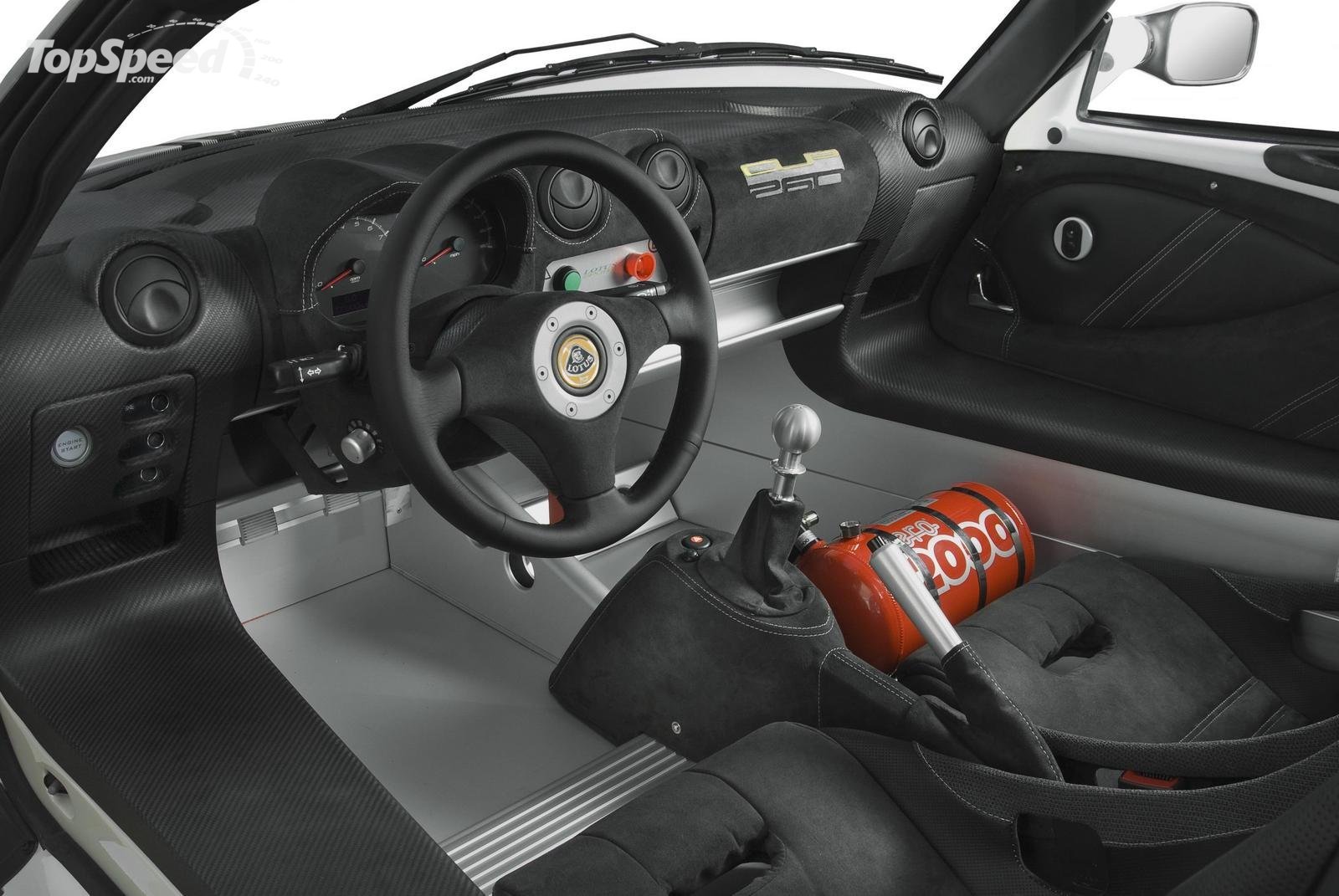
Auto Car | Lotus Evora Carbon Concept 2010 | The multi-award winning Lotus Evora provides the basis of the stunning carbon design concept unveiled at the 80th Geneva Motorshow. The car boasts a stylish carbon fibre, leather and alcantara interior, aggressive carbon diffuser and an evocative high tech composite body.The Evora Carbon Concept car emphasises Lotus’ motorsport pedigree, utilising beautiful high quality materials with exposed carbon fibre and plush alcantara. The striking white concept car is finished in an advanced water based pearlescent paint that contrasts with the exquisitely finished weave on the carbon fibre panels.


The head turning looks of the Evora Carbon Concept car provide a more purposeful, planted stance with the car looking lower and more aggressive. This styling direction is continued with a structural carbon fibre roof, Lotus Motorsport influenced carbon diffuser and carbon splitter. The Evora Carbon Concept car retains the same class leading handling and high tech aluminium bonded and extruded chassis of the production car.The contemporary interior of the Evora Carbon Concept car combines the lustre of the carbon panels with perforated leather and matt alcantara. The bespoke interior uses swathes of sumptuous grey alcantara to cover the footwell, dashboard and roof.


The soft texture of the leather and alcantara are juxtaposed with the hard surfaces of the carbon fibre to provide a satisfying sensory experience.The Evora Carbon Concept car has diamond cut forged 19” alloy wheels front and rear, shod with Pirelli P-Zero Corsa tyres (235/35 wide front and 285/30 wide rear). The wheels and tyres give the Evora real presence filling the wheel arches and giving the car a purposeful appearance.


Donato Coco, Director of Lotus Design commented, “The design of the Evora Carbon Concept car features exotic, high tech materials that offer a good synergy with the Lotus brand image, expressing our motorsport heritage and history of stylish sports cars for which Lotus are renowned.”

Source : www.topspeed.com
Read More..

Lotus Evora Type 124 Endurance Racecar 2010


Auto Car | Lotus Evora Type 124 Endurance Racecar 2010 | The Lotus Evora Type 124 Endurance Racecar has been developed from the award-winning Evora road car and is built to FIA regulations and safety standards.The Type 124 (pronounced One Twenty Four) Endurance Racecar is the next step in the evolution of the Evora. The car will make its 24 hour racing debut at the ADAC Nürburgring 24 Hours which provides a great test for the Evora's performance, efficiency and durability under tough and demanding endurance race conditions.At the heart of the Lotus Evora are fundamental racecar elements: mid-engine layout, high-tech and super-stiff extruded and bonded aluminium chassis and very strong lightweight forged aluminium wishbones.


All these elements mean that it is a natural evolution from the road going Lotus Evora to a competitive endurance racecar.From the outset the design team had intentions to take the Evora racing and the chassis was designed with this in mind. Endurance races are the perfect events to showcase the efficiency, handling and durability characteristics that have been fundamental to the concept of the Evora.The Lotus Evora Type 124 Endurance Racecar has a race-tuned version of the mid-mounted Toyota V6 engine, with power increased to over 400 ps (depending on race regulations). Vehicle mass is expected to be reduced by up to 200 kg, bringing the weight of the racecar to less than 1200 kg (depending on race regulations).


Further changes for the Lotus Evora Type 124 Endurance Racecar include a six speed sequential paddle shift racing gearbox, full FIA specification roll cage, FIA-compliant 120 litre ATL fuel system, FIA fire extinguisher system, competition carbon fibre rear wing, diffuser and front splitter.
The racecar is fitted with AP Racing 6 piston callipers front and rear, with a race-tuned Bosch ABS system, 4-way adjustable dampers and adjustable anti-roll bars. The racecar runs on 18" rims shod with Pirelli racing slicks and the wheels widths have been increased over the roadcar to 9 ½ J on the front and 11 J on the rear.The aerodynamically efficient Lotus Evora Type 124 Endurance Racecar body design, made from lightweight composite and carbon fibre panels, remains predominantly unchanged from the road car, with the only modifications being to the lower sections of the front and rear clamshells and the side sills.


Luke Bennett, Director of Lotus Cars Limited, said, "Motorsport has been in our blood ever since our founder, Colin Chapman, built the first Lotus back in 1948. We are proud of our motorsport history, which includes victories in Formula One, Le Mans, saloon car, rally car and sportscar racing around the world; more recently, we won the British GT3 Championship in 2006 with the Lotus Exige. The Lotus Evora Type 124 Endurance Racecar is from the same unique stable and we expect it to be a competitive racecar when we enter various endurance races next year."Roger Becker, Vehicle Engineering Director for Group Lotus Plc said, "Every Lotus car is designed to be at home on the race track as well as the road, and the Evora is no different.


Source : www.drivebulletin.com
Read More..

Lotus Exige Cup 260 2010


Auto Car | Lotus Exige Cup 260 2010 | The Lotus Elise/Exige twins are quickly becoming the Porsche 911s of Britain. Or are they British Mustangs? In other words, totally fantastic sports cars with so many special variations that only the idiot savants among us can keep up and keep track. Case in point: meet the new for 2010 Lotus Exige Cup 260. What is it? A faster, stiffer and – you guessed it – lighter version of the already impossibly quick, nimble and skinny Exige S introduced in March of this year.


Power remains the same (257 horsepower and 174 lb-ft of torque from the supercharged 1.8-liter Toyota inline-four) but remember what Lotus founder Colin Chapman said: "Adding power makes you faster on the straights; subtracting weight makes you faster everywhere." With that in mind, the Cup 260 not only makes use of the 84 pounds of weight savingsthat the skeletal Exige S lords over the base Exige, but sheds further kilos of flab through some pretty aggressive dieting.


Extensive use of carbon fiber saves another 26 pounds, lightweight components (battery, wheels, subframe, fly wheel, rear-window delete, supercharger U-bend pipes) chop off a further 48 pounds. In fact, Lotus says the wheels are the lightest ever fitted to a production car. Ripping out other useless junk like the carpets, rearview mirror, sun visors and the like sheds another 10 pounds.


Add it all up and you're left with a car that weighs just 1,958 pounds, slightly more than half the weight of a Chevy Camaro SS (3,857 lbs). And where the 426 hp Camaro can hit 60 mph in five seconds, the lithe little Lotus can do it in four ticks flat, thanks in part to an all-new launch control system but also because it doesn't weigh anything. The 30% stiffer rear-end coupled with the two-way adjustable Ohlins dampers means the Exige Cup 260 should handle even better than all the numerous Exiges that came before it. Price? Nothing is set in stone (ha ha) about the U.S. MSRP but $80K seems about right – provided Lotus decides to import it. Full press release after the jump, high-res gallery splendor below.


Source : www.autoblog.com
Read More..

Lotus Exige S 2010


Auto Car | Lotus Exige S 2010 | The Lotus Exige is a renowned high performance coupe that has a well earned reputation of choice for drivers who demand uncompromised performance, both on the road and on the track.Lotus has always pursued efficiency and fuel economy and for the 2010 Model Year Lotus Exige S, Lotus has reduced the emissions to only 199 g/km CO2 and increased the fuel economy to an impressive 8.5 litres/100 km on the Official European Combined Cycle and a frugal 6.5 litres/100 km on the Official European Extra Urban Cycle.


The 2010 Model Year also sees the introduction of a few key changes to the Exige to enhance the look and improve aerodynamic performance. A restyled front end and new larger, rear wing that not only reduces drag, but also gives a more muscular stance enhancing the lightweight shrink-wrapped look of the whole car.The composite rear wing is based on the design from the Exige GT3 road car concept shown at the Geneva Motorshow in 2007. Compared to the 2009 Model Year Exige tailgate mounted wing it is 181 mm wider and mounted 46 mm higher and 61 mm further back. It is attached to the rear bodyshell clam via rear end plates which not only increases the stiffness of the whole structure but also ensures that as much of the airflow as possible passes over the rear wing. This careful airflow management increases stability, reduces drag and, most importantly, maintains the impressive downforce figures of 42 kg at 160 km/h.


The restyled front end includes a larger, more angular air intake mouth to help funnel more air through the radiator, to improve the efficiency of the engine system. Ahead of the front wheels on either side of the main aperture, two larger air intakes increase the airflow to the twin oil coolers. Horizontal vanes bisect these oil cooler air-intakes to stabilise the airflow to further increase the cooling efficiency.
the Lotus Exige has developed a hardcore fan base around the world and its popularity has placed it as one of the legendary sportscars of the 21st century. So far, over 5000 Exiges have been hand-built at our high-tech manufacturing facility making it a significant contributor to our global production. The lightweight Exige has one of the highest specific power outputs of any globally emissions certified car and 133 hp per litre is a perfect demonstration of Colin Chapman’s philosophy of performance through light weight and of Lotus’ relentless pursuit of efficiency. The same technology that makes a lightweight car a high performer also makes it efficient – how many cars have performance figures of 0 – 100 km/h in 4.77 secs but produce only 199 g/km CO2.


The functional components of the car are also beautifully designed as Russell Carr, Chief of Lotus Design, explains, ‘For 2010 we have taken the already visually extreme Exige and given it even more visual drama. The changes we have integrated into the front and rear of the Exige signal an even clearer and purposeful intent. The purposeful rear wing is race inspired, the new angular air intakes and full width splitter gives a more hard-edged and aggressive look. Overall, the Exige appears more planted and gives the illusion that both the front and rear of the car are wider than they really are without losing its agile and lithe character.’

Source : autosguides.com
Read More..

Lotus Exige S Type 72 2010


Auto Car | Lotus Exige S Type 72 2010 | The Lotus Type 72 was driven by such Lotus greats as Jochen Rindt, Emerson Fittipaldi, Ronnie Peterson and Jacky Ickx and won three Formula One Constructors' Championships (1970, 1972 and 1973) and two Drivers' World Championships (the first being won by Jochen Rindt in 1970 and the second by Emerson Fittipaldi in 1972).The colour scheme of the Exige S Type 72 commemorates the famous and easily recognisable black and gold Lotus Type 72 livery and is finished by the same sign writer who painted racing cars for Team Lotus.


Performance through light weight has long been a Lotus philosophy. The 935kg Exige S Type 72 sprints to 60 mph in just 4.5 seconds and to 100 km/h in 4.7 seconds, before reaching a top speed of 145 mph, 233 km/h. The Exige S Type 72 also offers class leading fuel economy and emissions, with fuel economy of 6.5 litres/100 km (43.5 mpg) on the Extra Úrban Cycle and CO2 emissions of 199 g/km.The Exige S Type 72 is a powerful supercharged mid-engined sportscar that is equally at home on the racetrack or open road. The intercooled engine has VVTL-i technology ensuring impressive performance all the way to the rev limiter at 8500 rpm.


The Sport Pack comes as standard on the Exige S Type 72 which has a bespoke high quality interior, including black micro fibre ProBax sports seats with gold stitching. Each car comes with a special build plate commemorating one of the F1 car's 20 Grand Prix victories. The exterior of the Exige S Type 72 features unique black and gold light weight wheels and is finished with hand-painted gold Type 72 and Exige S logos, (the Sport Pack also includes a T45 steel main roll hoop, Lotus Traction Control, twin oil coolers and an adjustable front anti-roll bar).
All Lotus cars offer outstanding handling and performance, and the Exige is no exception offering excellent dynamics and great driver involvement. Lotus ride and handling gives an inspiring driving experience and the mid-engined layout of the Lotus Exige S Type 72 offers fantastic balance and agility.


Luke Bennett, Operations Director for Lotus Cars Limited stated, 'The Lotus Exige S Type 72 is an evocative sportscar, combining cutting edge handling and performance with the iconic Type 72 colour scheme, one of the most famous racing liveries of all time. The Exige provides an intense driving experience either on road or track and this limited edition is a worthy car to celebrate such a legendary racing car.'Clive Chapman, Director of Classic Team Lotus said, 'The Type 72 was a very significant car for Team Lotus and indeed for the world of F1. It was a revolutionary design that pioneered the use of side mounted radiators to achieve its distinctive 'wedge' profile, which delivered a significant aerodynamic advantage. Furthermore, by minimising unsprung weight and using a torsion bar, rising rate suspension, tyre performance was excellent. The Lotus Type 72 design was so advanced that it was competitive for an extraordinary six years.'
The Exige S Type 72 options include: Air Conditioning, Limited Slip Differential and the Performance Pack, which includes a power increase to 240 PS, larger AP Racing brakes, enlarged roof scoop (compared to the standard Exige S) and Lotus variable traction control and Lotus launch control.

Source : www.conceptcarz.com
Read More..

Lotus Exige Scura 2010


Auto Car | Lotus Exige Scura 2010 | Lotus has just released pictures of perhaps the hottest Exige yet, the sexy 2010 Exige Scura. It’s based on the Exige S and powered by the wild, 257-hp, supercharged 1.8-liter four-cylinder also found in the 2009 Exige S260 Sport.Besides the raucous motor, the real kick of the Scura (which means “dark” in Italian) is its “soft-feel” matte black paint.


Lotus paradoxically brags that the paint job both “reflects the stealth character” of the Exige (indeed, the car will be known as the Exige Stealth in Japan) and makes it “a real head-turner.” Contrasting high-gloss black stripes bisect the car, while carbon-fiber components—including sport seats, center console, front splitter, oil-cooler intake vanes, side air scoops, and rear spoiler—suck up weight and light like a black hole.


The difference inside, however, is that much of that carbon fiber—in marked contrast to the outside—is glossy. Other equipment fitted to the Scura includes launch control, two-way adjustable dampers, Eibach springs with variable-height spring platforms, and unique matte black lightweight forged wheels wearing Yokohama A048 LTS tires. All of the lightweight bits are said to help reduce weight by about 22 pounds compared with the Exige S, bringing it down to around 2040 pounds.


Since little has been done to the powertrain, the 0–60 sprint is expected to match the S260 Sport’s claimed 4.1-second time. Production of the Scura will be limited to just 35 units worldwide, none of which will be coming here, sadly. (Lotus is said to have a few of the 50 2009 Exige S260 Sports sitting in showrooms, so there may indeed be no need for the Scura here.) Prices start at £45,950 in England, which equates to a little more than $75K in the U.S. 


Source : www.caranddriver.com
Read More..

3/31/11

Lotus Elise 111R 2004


Auto Car | Lotus Elise 111R 2004 | The new Lotus Elise probably has the lowest CO2 for its performance for any gasoline high performance sportscar in the worldThe Lotus Elise revolutionised the sportscar market 14 years ago when the small lightweight agile 2-seat mid engine sportscar was introduced. By ensuring that the Elise stuck rigidly to Lotus’ core values of performance through light weight, the Elise was able to produce supercar performance with city car economy.Making its debut at the 80th International Geneva Motorshow, the 2011 model year Lotus Elise introduces a number of changes and improvements to maintain its class leading position.


For the 2011 model year, the Elise range will consist of the following variants:• Lotus Elise – 136 PS, less than 155 g of CO2 /km – new 1.6 litre engine *• Lotus Elise R – 192 PS, 196 g of CO2 /km – 1.8 litre engine• Lotus Elise SC – 220 PS, 199 g of CO2 /km – 1.8 litre supercharged engineKey changes and improvements to the whole of the 2011 model year Elise range• New evolution body design incorporating new front clamshell, rear bumper and engine cover• New all in one integrated headlights including LED day light running lights and LED direction indicators• Improved aerodynamics with a reduction in Cd by 4%, resulting in better fuel economy• New cast and forged wheels•


Vehicle warranty increased from 2 years to 3 years and 36, 000 milesAdditional changes for the 2011 model year entry level Lotus Elise• New high technology 1ZR-FAE 1.6 litre engine with Valvematic and Dual VVT-I technology to optimise the performance and efficiency of the engine• Less than 155 g of CO2 per km (an improvement of over 13% compared to the 2010 Elise S)*• Combined fuel consumption 6.14 litres / 100 km (46 mpg)*• New 6 speed close ratio gearbox• Cruise control available as part of the Touring packThe body – an evolutionThe new 2011 model year Elise range is on sale now and will be in showrooms from April 2010. The body of the new 2011 model year Elise is an evolution of the iconic Elise design, retaining the character and style, while offering a more planted, purposeful stance and a pure, contemporary look that links it to the Evora.


As with all Lotus product the design is an exciting blend of dramatic style and functional efficiencyThe new Elise body has a fresh sculptured front, including a new bumper, front clam and access panel that combine to give the Elise a wider look with more road presence.At the rear of the car the new engine has been encased by a distinctive ‘twin-spine’ engine cover whilst lower down a more aggressive diffuser is tightly wrapped by an elegant new bumper design that now includes the rear licence plate.New headlamp units with distinctively sculptured LED lighting guides (incorporating daytime running lamps and direction indicators) give a contemporary twist to this classic design. Elsewhere, the signature, Lotus ‘mouth’ and familiar sculptured forms have been sensitively refined to give a crisper, more dynamic look.


The repositioning of lamp functions has enabled the creation of broad clean surface between the fenders which combines with sleek corner intakes and prominent splitter detail to give a broader more planted stance.The theme of purity is carried through to the cooling apertures that are efficiently finished with a new lightweight aluminium mesh that gives the car a classically sporting character.

Source : www.lotuspic.com
Read More..

Lotus Exige 2004


Auto Car | Lotus Exige 2004 | After an absence from the market place for 2 years, Lotus is reintroducing the Lotus Exige – a car that at the time revolutionised the hardcore sports coupé market despite being on sale for just over 18 months.The first generation Exige was introduced to the world in early 2000 as a racecar for the road. Born out of the successful Lotus Sport Elise racecar, which was campaigned throughout Europe with such success in 2000 and 2001, the Exige was hand built in low numbers for a few markets around the world.


The second generation Exige, unveiled as a world debut at the Geneva Motorshow in 2004, takes the same racecar-for-the-road philosophy and applies it to the driver of today.With phenomenal performance and handling, powered by an advanced 1.8 litre VVTL-i (Variable Valve Timing with Lift – intelligent) engine producing a maximum power output of 141 kW and 181 Nm of torque, the Exige sprints to 100 km/h in 5.2 seconds and 160 km/h in 13.2 seconds before reaching a top speed of 237 km/h.


Key to this phenomenal performance and handling is the total aerodynamic package (which gives 41.2 kg of downforce at 160 km/h - 19.3 kg: front and 21.9 kg: rear) and light weight, the latter made possible through innovative engineering and clever design; indeed the Exige weighs in at 875 kg - unladen with no options - giving a power to weight ratio of 161 kW/t and 4.56 kg/PS.Being a true mid-engine sportscoupé, the high tech engine is located behind the cockpit and in front of the driven rear wheels. Power comes from the state-of-the-art 2ZZ-GE 1.8 litre 4 cylinder 16-valve VVTL-i (Variable Valve Timing and Lift-Intelligent) engine linked to the C64 six-speed gearbox. The engine and gearbox combination, sourced from Toyota, was chosen as the ideal engine for the Exige and perfect for the Lotus brand philosophies.


The lightweight engine, with a compact metal matrix composite alloy cylinder block has been subject to a rigorous testing and development programme which, as part of Lotus’ key federal Elise programme, has involved over half a million miles of testing in a wide range of extreme climate conditions from the Arctic Circle to the Arizona and Nevada deserts and at altitude in Colorado. This is in addition to Toyota’s world renowned development and testing programme that had already been applied to the engine prior to the installation in the Exige.


To enable this class leading engine to carry the Lotus driving DNA, a brand new, custom-engineered Lotus T4 engine management system (EMS) has been developed. The software for the EMS was designed and developed by Lotus specifically for the Exige. This bespoke management system and the extensive calibration and validation work ensures that the Exige has unique performance characteristics perfectly suited to the fast road and track environments.


The engine management system enables the VVTL-i system to select the optimum camshaft profile, lift and timing across the full range of engine operating conditions. This interaction between the Lotus T4 EMS and the VVTL-i system gives the Exige its optimum linear torque characteristics, peaking at 181 Nm at 6800 rpm with the peak power of 141 kW at 7800 rpm.

Source : www.seriouswheels.com
Read More..