Showing posts with label Cadillac. Show all posts

8/15/12

2012 Cadillac CTS Base Wagon


Auto Car | 2012 Cadillac CTS Base Wagon | The 2012 Cadillac CTS Sport Wagon is a five-passenger midsize wagon with elegant cabin; bold styling; nifty gadgets; capable and secure handling; generous cargo space; strong engine choices.

The 2012 Cadillac CTS Base Wagon comes standard with 17-inch wheels, automatic headlights, a power liftgate, heated mirrors, keyless entry, dual-zone automatic climate control, an eight-way power driver seat, leatherette premium vinyl upholstery, a tilt-and-telescoping steering wheel, an auto-dimming rearview mirror, Bluetooth, OnStar and a seven-speaker Bose sound system with a CD player and satellite radio. The 3.0 Luxury adds remote ignition, a rearview camera, automatic wipers, additional sound insulation, heated eight-way power front seats (with adjustable lumbar), leather upholstery, driver memory functions, a cargo cover, a pet net, interior accent lighting and a six-CD changer.

2012 Cadillac CTS Base Wagon Specs: Exterior, Interior, Perfomance, Handling
Exterior
Body-color front and rear bumpers
Day time running lights
Driver and passenger and passenger power, heated ,body-color door mirrors
Power liftgate
Exterior dimensions: 192.0 in. overall length, 72.5 in. overall width, 58.0 in. overall height, 113.4 in. wheelbase, 61.8 in. front track, 62.2 in. rear track and 36.0 ft. curb-to-curb turning circle
Halogen headlights with projector beam lenses
Luxury trim: alloy & leather on shifter, carbon fiber look on doors and carbon fiber-look
Metallic paint
Rear window defroster
Weights: published curb weight (lbs): 4,204
Intermittent windshield wipers


Interior
Front and rear 12V power outlet(s)
Dual-zone fully-automatic climate control
Diversity antenna
Audio system with AM/FM radio, CD player (reads MP3 format) ; includes RDS , satellite radio
Cargo capacity: 58.0 cu. ft. w/rear seat down and 25.4 cu. ft. all seats in place
Compass
Trip computer: includes average speed, average fuel economy, current fuel economy and range for remaining fuel
Cruise control
Front cup holders
Outside air temperature indicator
Floor mats
Intelligent driver front airbag, intelligent passenger front airbag with occupant sensors and occupant switch off
Front driver seat : bucket with four 8-way power ; details: power height and power tilt, front passenger seat: : bucket
Height adjustable front seat belts with pre-tensioners for driver and passenger
Front seat center armrest
Headlight control with dusk sensor
Two active height-adjustable front head restraints, two rear seats head restraints
Interior dimensions: 38.8 in. front headroom, 37.1 in. rear headroom, 53.7 in. front hip room, 53.0 in. rear hip room, 42.4 in. front leg room, 36.1 in. rear leg room, 56.7 in. front shoulder room, 54.7 in. rear shoulder room and 98.0 cu ft. interior volume
Low tire pressure indicator
Navigation system with voice
Remote power locks , speed sensing
Vehicle speed-proportional power steering
Power windows, express driver and passenger
Front and rear reading lights
Rear seat belts for driver, rear seat belts for passenger, 3-point rear seat belts for center
Rear seat center armrest
Rear seats: split-folding bench with seating for three
Auto-dimming rear view mirror
Steering wheel-mounted audio controls
Remote control trunk/hatch release
Front and rear curtain airbag
Seating: five passengers
Main seat material upholstery
Service interval indicator
Front side airbag
Seven Bose speakers
Leather-trimmed, tilt/ telescoping steering wheel
Tachometer
OnStar telematics : includes engine shut down
Illuminated driver and passenger vanity mirror
Ventilation system with micro filter and automatic recirculation
Voice activating system for phone and navigation system


Perfomance
Engine: 3.0L V 6 DOHC with variable valve timing
Unleaded fuel
Fuel economy: EPA (08):, 18 MPG city, 26 MPG highway, 21 MPG combined and 378 mi. range
Gasoline direct fuel injection
18.0gallon fuel tank
Power (SAE): 270 hp @ 7,000 rpm; 223 ft lb of torque @ 5,700 rpm

Handling
ABS
Brake assist system
Ventilated four-wheel disc brakes
Electronic brake distribution
Electronic traction control (via ABS & engine management)
Immobilizer
StabiliTrak stability control
Independent front wishbone suspension with stabilizer bar and coil springs, independent rear multi-link suspension with stabilizer bar and coil springs
Tire kit
Read More..

10/23/10

1939 Cadillac

Auto Car | 1939 Cadillac | Although the economy experienced a gradual increase from 1936 to 1937, it took a slight dive in 1938. However, the economy bounced back in 1939, which meant higher sales throughout the industry. Pointed fronts reappeared on most of this year's GM cars, and the Sixty-Special was no exception.

Foremost among them was that magnificent 1930 surprise, the Sixteen, carrying an overhead-valve, 452-cubic-inch V-16 engine producing 165 horsepower and 320 pound-feet of torque. Horsepower was increased to 185 in 1934.

An undoubted great in an era of greats, the Sixteen was ostensibly available in 33 different models, submodels or trim variations ranging from a $5,350 two-passenger roadster to a $9,700 town brougham. Keep in mind those prices bought a very nice home in the Depression years.

The typical Cadillac Sixteen could return about eight miles to a 15-cent gallon of gas and 150 miles to a quart of oil. It could also cruise at 70 and top 90 mph. But brute performance wasn't its forte. Rather, the Sixteen was intended to elevate Cadillac into the rarefied realm of Packard, Peerless, and Pierce-Arrow, still the three giants of American motoring. That it did, offering superb luxury and smooth, effortless power with minimal shifting. Cadillac advertised the Sixteen's performance as "a continuous flow...constantly at full-volume efficiency...flexible...instantly responsive."

The Sixteen was only nine months old when Cadillac introduced another multicylinder engine, a 368-cubic-inch V-12. Essentially a V-16 with four fewer cylinders, it delivered 135 horsepower and 285 pound-feet of torque. The cars it powered also weren't quite as large the Sixteens, riding the Cadillac Eight's 140-inch wheelbase instead of an enormous 148-inch span.

Predictably, the Twelve also wasn't as fast, but its free-revving engine was renowned for smooth, even power. And that power was quite ample. A roadster could do about 85 mph with standard rear-axle ratio, and most Twelves could cruise all day at 70. Of course, the Twelve was cheaper than the Sixteen, by far, offered with 11 body choices in the $3,795-$4,985 range.

But despite their refined performance and majestic proportions, the multicylinder Cadillacs were anachronisms in the devastated Depression market, and none sold in significant numbers. The peak was 1930-31 with exactly 3,250 Sixteens and 5,725 Twelves.

Production was only fair for '32, then declined to about 700 and 400 units per year, respectively. Both models were dropped after 1937, but Cadillac made one more try starting the next year with an L-head V-16. At 431 cid and 185 horsepower, this engine was smaller and lighter yet more potent than the earlier overhead-valve design, but only 508 cars were so equipped through 1940, its final year.

There were two reasons why these grand Cadillacs fared so poorly. As noted, super-expensive cars with more than eight cylinders seemed socially inappropriate to many people in the early '30s. After their initial sales spurt, these models were shunned by most customers for the cheaper, less showy, but by no means inferior Cadillac Eights.

Source : auto.howstuffworks.com
Read More..

1932 Cadillac Series 370-B

Auto Car | 1932 Cadillac Series 370-B | In the mid 1920's, Cadillac wanted to compete with Lincoln, Duesenberg and Auburn for luxury automobiles by acquiring a custom body building manufacturer so, they bought Fleetwood. By 1928 they acquired/owned 100% of Fisher Body. Fleetwood was assigned the task of building their "custom bodies" and they were able to satisfy several different kinds of customers by varying designs above the belt line on basic body shells. Fisher body was now in charge of the rest of production. The longer 140 inch wheel base (as on this vehicle) was made so Cadillac could offer longer, lower slung body styles. The V12 engine that had the reputation of running smooth and quiet.  Improvements like a side mounted starter, oil filter, and oil level indicator may sound like standard equipment today but, it was big news in this era. The giant drum brakes increased from 16" to 17" and the hydraulic shock absorbers and low slung (huge) rear springs gave the "Cadillac-Ride" we are now all too familiar with. Due to the depression only 1709 of these fabulous V12 cars were produced  and sold in 1932, making the 1932 V12 Cadillac one of the rarest of years for the collector!

1932 Cadillac Model 370-B/262 formal 7-passenger sedan 140" wheelbase, 18.5 feet long front bumper to end of trunk, with the fabulous quiet and smooth Cadillac V12 engine of the day, gorgeous maroon & black paint, flawless interior, folding jump seats, perfect wood trim & accessories, dual sidemounts with hard shell (shown without hard shell in pictures) and mirrors, heron ornament (not pictured), factory locking trunk and rack, stunning chrome, always garaged, original miles, a Cadillac masterpiece, engine rebuilt, no mechanical problems, no oil leaks, runs and drives like new, goes 65 mph on highway all day long. Optioned with factory front and rear heaters with separate passenger compartment controls, rarely seen.  Meticulously restored to perfection by previous owner, a Doctor who lived in California, and comes from his collection purchased from his estate.  Only 1709 of these V12 automobiles made in 1932, a rare vehicle

The carburetors for the 1932 Cadillac V-12 engine were now supplied by Detroit Lubricator, and were supplied with fuel by a positive displacement pump rather than a vacuum tank. To protect the engine, a self-cleaning oil filter actuated by the vacuum boosted clutch pedal was added. Improvements to the braking included a vacuum booster, a system that became even more necessary as the coachwork became more elaborate and heavier. Two-position driver selectable shock absorber settings were now standard.

Changes to the coachwork were minor for 1932. The roof heights were lowered slighter giving it a more modern appearance. The headlights were free-standing without a tie bar, and the fenders and running boards flowed from one element to the other. The radiator was entirely enclosed in a grille shell.

This vehicle is a 1932 Cadillac 370-B V12 Imperial Seven-Passenger Sedan. It has fully-enclosed coachwork that offers quality, comfort, and luxury. There is a rollup divider window, black leather upholstery in the front and brown cord cloth on the permanent and occasional rear seats. Amenities in the rear compartment include a smoker's kit and a Jaeger clock and accessory case. The rear quarter windows and the back window have rollup shades. The car is painted in onyx black and there are dual sidemounted spares in hard covers with rear view mirrors. There are body color wire wheels with chrome trim rings, wide white wall tires, and a luggage rack with dual blue dot taillights. There is dual cream and tan coach-lines.

Source : www.miles-pocketwatches.com
Read More..

STRUT Cadillac Escalade Aspen Collection

Auto Car | STRUT Cadillac Escalade Aspen Collection | The 2007 Cadillac Escalade Vail Collection has been designed for Escalade devotees who desire to customize their vehicle with a distinctive look that showcases the owner’s flair for style. Included in this collection is one crimped mesh front grille with STRUT shield attached, two side vents with STRUT shield, and one STRUT lift gate shield.

The Escalade is one of the most respected luxury SUVs on the road today and the sensuous curves and sleek styling of the body fit the STRUT triple chromed, woven grille perfectly. The distinctive STRUT shield in the center indicates to everyone that this driver has style and class.

STRUT® is the trendsetting developer of a unique collection of automotive accessories, deemed by consumers and retailers alike to be the pinnacle of quality and fashion. From mesh grilles to custom bumpers and emblems, all products are handcrafted of the finest chromed 316L stainless steel and signed by the artisan, providing ongoing luster and a superior appearance.

-The excitement that our products have generated among discriminating drivers is speeding up the process to meet the growing demand for new and distinctive designs
-HPA is the dealer for Strut Fashion in ARIZONA. These grills are the pinnacle of over the top fashion accessories for the enthusiast who enjoys the luxury lifestyle.
-Made from the highest quality stainless steel and triple chrome plated, these grills will remain brilliant for many years.
-Package contains: 1 crimped mesh front grille w STRUT shield attached, two side vents w STRUT shield, one STRUT lift gate shield

Source : www.hpautoworks.com
Read More..

8/25/10

CONVERJ: THE “CADILLAC” OF ELECTRIC VEHICLES

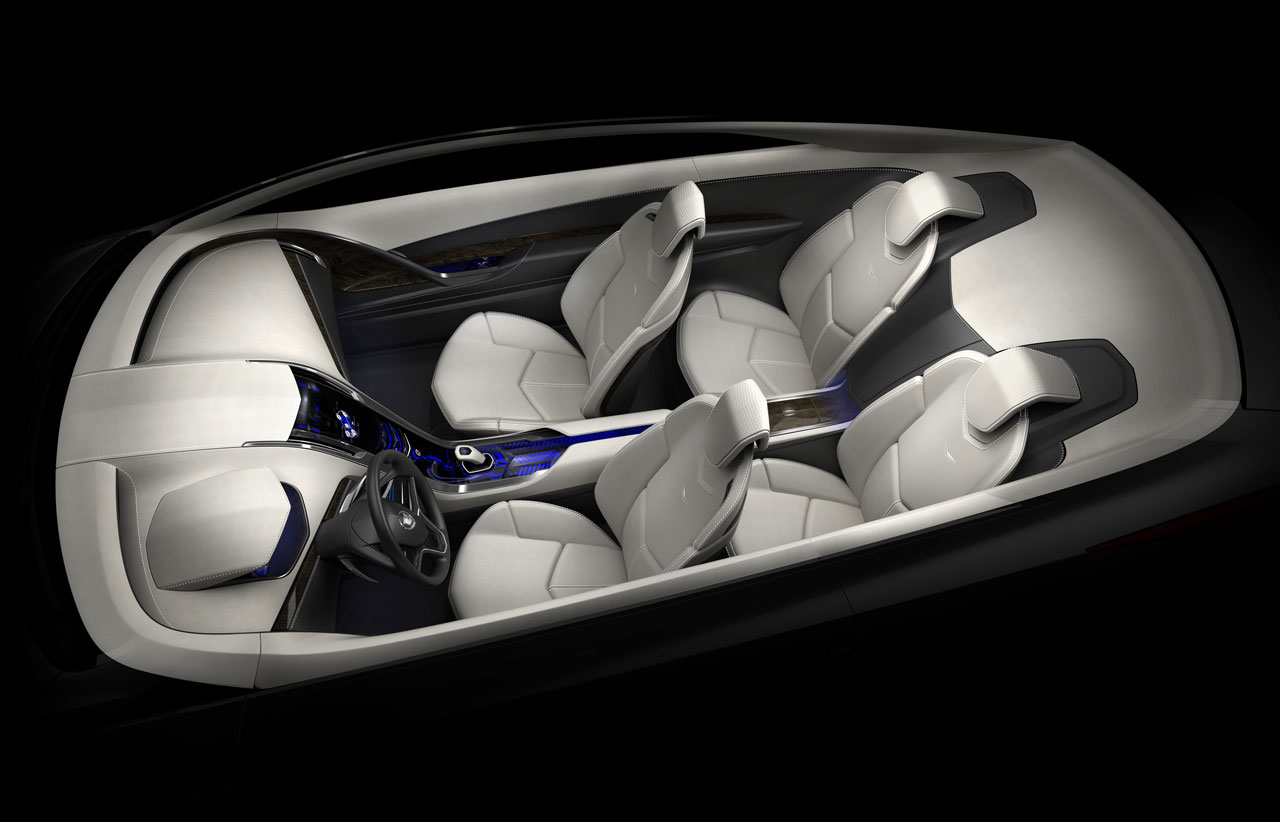
Auto Car | CONVERJ: THE “CADILLAC” OF ELECTRIC VEHICLES  | General Motors unveiled a further glimpse at the potential of electric propulsion today, this time in the form of luxury transportation, with the Cadillac Converj Concept. The Cadillac Converj was developed as a well-appointed grand touring coupe with a bold design and a host of interactive technology.

The four-passenger Converj concept is intended to show how GM’s revolutionary electric propulsion technology – called Voltec – can power a luxury coupe with a typically Cadillac “no compromises” design. The technology enables up to 40 miles of gas- and emissions-free electric driving with extended-range capability of hundreds of miles

Bob Lutz, GM’s vice chairman of Global Product Development, said the Converj concept has production substance. “It’s a logical extension of our plan to reinvent the automobile,” he said. “It clearly shows what a Cadillac electric vehicle could look like, and clearly indicates that global luxury customers can have a car that has both strong design and electric propulsion with a total range of hundreds of anxiety-free miles.”

Cadillac’s extended-range electric vehicle (E-REV) concept has a new body style that is an evolution of the brand’s traditional Art and Science design theme. An aggressive, forward-leaning arc profile is the foundation for the sporting stance. And more than a Cadillac in form, Converj is also intended to be a Cadillac in substance, with the premium materials, technology and driving dynamics that are hallmarks of the brand.

The Cadillac Converj’s Voltec electric propulsion system is made up of a 16-kWh, T-shaped battery, an electric drive unit, and a four-cylinder engine-generator. It uses electricity as its primary source to drive the car.A thermally managed battery pack contains more than 220 lithium-ion cells that provide the primary power to drive the Converj electrically up to 40 miles without using fuel or producing tailpipe emissions. The battery is integrated into the Converj’s chassis and stores electricity from the grid when the vehicle is plugged in. It takes less than three hours to recharge the battery at 240V, or about eight hours from a 120V outlet.

When the battery’s energy is low, the Converj seamlessly switches to extended-range mode. During this secondary level of operation, electricity needed to power the vehicle is created on-board by a flex-fuel-powered engine that operates much like a home generator to create electricity. The engine-generator ensures a constant supply of power for hundreds of miles until the car is refueled or plugged in to recharge the battery. This extended-range mode eliminates the range anxiety that comes with driving pure electric vehicles that offer no backup power when the battery charge is low.

Whether in electric or extended-range mode, the Converj is propelled all the time by an electric drive unit. It converts electrical energy from the battery or the engine-generator into mechanical energy to drive the front wheels. It also delivers 273 lb.-ft. (370 Nm) of instant torque, for a quick launch, and 120 kW of power. The top speed is 100 mph.

There is no compromise in vehicle performance in either mode of operation. To enhance the ride feel, the Converj also features GM’s Magnetic Ride Control; and for even greater efficiency, energy during braking is captured and stored in the battery.

(www.autoincar.com)
Read More..

8/22/10

2011 Cadillac CTS-V Sport Wagon

Auto Car | 2011 Cadillac CTS-V Sport Wagon | What you see here is the "Cadillac CTS-V Sport Wagon Show Car," as GM describes it. Besides the custom paint job and subtle changes to the back end, this is the car that buyers will see in showrooms toward the end of 2010 and in early 2011.

What makes the CTS-V Sport Wagon special? You can get the same 556-horsepower, supercharged V-8 engine in the CTS-V sedan and upcoming CTS-V coupe, but the wagon, well, it has a hatch.

Its unique body style is all we can say about what distinguishes the wagon from either of the other two high-performance variants. It will ride on 19-inch aluminum wheels, pack magnetic ride control, Brembo brakes and has an optional panoramic sunroof. OK, so there's something it has that the other two don't.

Why make a wagon this fast? It's not unheard of. German automakers have similarly high-powered versions of their wagons. They'd be good competition for the CTS-V, too, and we're sure every enthusiast magazine would write a comparison piece. There's just one problem. None of the German automakers currently sell any of their wagons in the U.S., and there are no plans to do so.

The 2010 Cadillac CTS-V Sport Wagon will hit markets later this year and if it makes it to Europe, it will give the Mercedes-Benz E 63 AMG wagon, BMW M5 Touring and the Audi RS6 Estate a run for their money.

While under the hood CTS-V Sport Wagon shares its supercharged 6.2L V8 with its sedan and coupe siblings, it receives some minor interior upgrades including a new steering and more comfortable seats.

So, gaze upon the CTS-V Sport Wagon. It's truly a car with no equal.

(www.cars.com)
Read More..

8/19/10

2006 Cadillac XLR-V

Auto Car | 2006 Cadillac XLR-V | Cadillac's two-seat XLR roadster has hardly set Mercedes-Benz aquiver with its sales success, but the high-performance XLR-V might have the chops to win a few sales away from the SL by offering SL55 AMG pace for loaded SL500 money. The dedicated XLR spotter may be able to discern the differences between stock and hot rod XLR, though the changes are pretty subtle: polished wire mesh upper and lower grilles; unique nineteen-inch, ten-spoke aluminum wheels; a hood bulge; and four stainless-steel exhaust tips. The XLR's interior--which hardly bears scrutiny against the SL or a {{{Maserati Spyder}}}--has been slicked up a bit with ebony wood, aluminum accents, and additional leather trim, but it's no SL55 AMG or upscale 911.

The XLR chassis is sharper than the SL500's, however, and Cadillac has enhanced it with a stiffer front anti-roll bar, the addition of a rear bar, and a sportier Magnetic Ride Control calibration. The brakes have been uprated, with bigger diameter 13.4-inch front and 13.0-inch rear cross-drilled rotors, a setup that is essentially the same as the Corvette Z51's. The StabiliTrak stability system now has four positions. The larger diameter wheels are accompanied by wider Pirelli run-flat 235/45 front and 255/40 rear tires.

The naturally aspirated XLR is hardly underpowered, with 300 hp and 310 lb-ft of torque, but the V's supercharged and intercooled 4.4-liter, 32-valve DOHC Northstar V-8 engine makes an exceedingly healthy 440 hp and 425 lb-ft-enough, says Cadillac, to push the V from 0-60 mph in less than five seconds. The engine is mated to a six-speed automatic transmission, the first time GM has used a six-speed auto in a rear-drive configuration. This features manu-matic control and GM's Performance Algorithm Shifting (PAS), which downshifts under high g cornering to ensure you don't hunt for a gear on corner exit.

Specification

Make: Cadillac
Model: XLR-V
Year: 2006
Country Of Origin: United States of America
Type: Grand Tourer
Class: C
Engine: V-8, Single Belt Driven Supercharger (Rootes Type Centrifugal), 4,371 CC, Gasoline
Horsepower: 443 BHP @ 6,400 RPM
Tourque: 414 LB FT@ 3,600 RPM
Redline: 6,700 RPM
Brakes: Cross Drilled Ventilated Steel Discs with ABS all Round
Wheels: 19 Inch Aluminium Alloy
Handedness: Left
Dials: All Analouque
Transmission: 5 Speed Automatic
Driveline: F/R Front Engined, Rear Wheel Drive
0-60: 5.3 Seconds
Top Speed: 168 MPH

(automobilemag.com)
Read More..

7/15/10

2011 Cadillac CTS Coupe First Drive Review

Auto Car | 2011 Cadillac CTS Coupe First Drive Review | Although most Cadillac vehicles still have a way to go to satisfy as drivers’ machines, the second-generation CTS has appeared on our past three 10Best lists. In awarding its 2010 trophy, we called it “maybe the best American car ever made.” High praise, and its combination of unapologetically brash styling, modern luxury, and strong performance credentials especially in high-po V spec backs it up. For 2011, the new CTS coupe joins the sedan and wagon, adding more style and a higher concentration of performance to the CTS’s winning formula. The CTS coupe is one of those cars that love the camera, and it’s no less stunning in the flesh.

Walking around the car, one notices several aspects of the design easily missed in photographs, such as the parallel “light catcher” lines helping to break up the tall body sides, the tastefully glitzy twin center-mounted tailpipes, the remarkably seamless-looking joint between the body-side stamping and the roof, and the center spine that travels all the way back over the car’s huge rump. The windshield is two degrees “faster” up front than the sedan’s, and the razor-sharp taillamps and the CHMSL spoiler also have aerodynamic-enhancing properties. The only unfortunate bits are credit-card-sized spacer panels above the recessed, solenoid-actuated door releases; they mar an otherwise perfect waistline. In any case, there is visual drama from every angle, and it works.

Inside, most CTS sedan components are imported without change, although the mood is intensified due to a lower mounting point for the seats, dropping occupants roughly an inch lower into the dash and console architecture. The window sills are high, making arm-out-the-window cruising a bit awkward, but surprisingly, the super-high rear end doesn’t gobble up every shred of rearward vision. It feels purposeful, and we found ourselves very comfortable during our drive.CTS coupe pricing starts at $38,990 for the rear-wheel-drive model equipped with the automatic, rear park assist, power seats, 18-inch wheels, keyless operation, and a Bose sound system. Selecting the manual transmission gives a $1300 saving but requires the $2090 summer-tire performance package.
The $43,430 Performance Collection model adds HID headlights, leather seats, and a surround-sound stereo with a 40-gig hard drive and USB input. Jump up to the $47,835 Premium Collection, and enjoy ambient interior lighting, heated and cooled front seats, a heated steering wheel, genuine wood trim, a rearview camera, and navigation. All-wheel drive is a $1900 option. For comparison, a rear-drive BMW 335i coupe starts at $45,000 or so and will run well over $50,000 with similar equipment. Soon after launch, the CTS-V coupe will arrive with its monstrous 556-hp, 6.2-liter supercharged V-8. It will run a rather reasonable (for the performance) $62,990, and it comes with Brembo brakes, magnetorheological adaptive shocks, and 19-inch wheels with performance tires. The standard and V CTS coupes will be heavily featured in upcoming advertising; Cadillac tells us the brand intends to display more bravado in relaying the virtues of its cars. Given the goodness of the CTS sedan and wagon, and now this coupe—and provided the upcoming XTS, ATS, and flagship models can display the same sort of competence—we’d say Cadillac deserves to thump its chest a bit.
Read More..