Showing posts with label Dodge. Show all posts

6/17/11

Dodge Razor Concept 2002


Auto Car | Dodge Razor Concept 2002 | A sprint to 100 kilometers per hour in about six seconds, top speed greater than 225 kilometers per hour, a six-speed manual transmission, rear-wheel drive and an engine displacement of 2.4 litres. These specifications can only mean one thing -- less weight, more fun. Unveiled at the 2002 North American International Auto Show in Detroit, the Dodge Razor concept car embodies the purest of sports coupe design: aspirational, emotional and inspirational. Through efficient design, Dodge Razor cuts right to what is vital for enhanced driving pleasure.The Dodge Razor concept car is a joint effort between the Chrysler Group design studios in Auburn Hills, Michigan, and Carlsbad, California. Dodge Razor's exterior was developed by Akino Tsuchiya and Kevin Verduyn, while its interior was executed by Chris Schuttera and John Sodano. They were inspired by classic European sports cars of the 1960s, which brought a modern minimalist design philosophy to the project. Searching for a name that reflected the car's energy and attitude, the Chrysler Group approached Razor USA to form a licensing partnership with the trendsetting and youthful Razor brand.


"Dodge Razor has a simple shape with every line offering an abundance of emotion and purpose," said Tsuchiya. "Razor's dramatic proportions scream 'I'm bold, I'm powerful, I'm Dodge'. The in-your-face 'Orange Slice' body colour reflects the same attitude." Adds Verduyn: "Working off an all-new platform, we could create extreme proportions. The long hood, high sills, wide body, narrow greenhouse and low centre of gravity all indicate secure, protective performance."To keep the Dodge Razor affordable should it ever reach production, many "off-the-shelf" corporate suspension and underbody components were used. While the six-speed manual transmission was developed in Stuttgart, Germany, the engine is an upgraded version of Chrysler Group's 2.4-litre inline DOHC
four-cylinder, now with a turbocharger and intercooler. The engine develops 187 kW (250 bhp) and 312 Nm (230 lb.-ft.) of torque. Aimed at young driving enthusiasts, the Razor concept was designed with a targeted sticker price of $14,500 within the USA.


Reflecting the design attitude of the popular Razor kick scooter, the design of the Dodge Razor suggests forward motion even when the concept is parked on an auto show turntable. It seems to be leaping ahead with its rear wheels larger than the already massive front wheels. Its signature Dodge crosshair grille sits solidly on the front spoiler, while the exhaust tips are incorporated into the rear air deflector."We are proud to join forces with the Chrysler Group on a car that complements Razor's lineup of youthful, high-tech products," said Carlton Calvin, president of Razor USA LLC. "The Razor philosophy is about revolutionizing classic products with beautiful design and technological innovation, and we are thrilled to see a similar philosophy reflected in the Dodge Razor."True to minimalist form, Dodge Razor's only ornamentations are the chrome bumpers, the racing-style billet-aluminium fuel-filler cap, the classic door handles and mirrors and the jewel-like lamp design. "This project really is about the power of austerity and purity," said Verduyn.


The same holds true for the interior. It offers the necessities for driving, nothing more. No power windows or mirrors, no radio or leather power seats, no frills whatsoever. Dodge Razor offers its two occupants lightweight, competition-style seats, four-point racing harnesses, storage behind their seats and the pure joy of driving. "Razor's interior is like a clean canvas. Our vision is that you would be able to get additional features through MOPAR to paint your ideal driving setting," said interior designer Schuttera.The Dodge Razor's instrument cluster has an integrated tachometer/speedometer with analogue reading of the revs and a digital read-out of the speed. This compact unit is flanked by easy-to-read gauges for temperature/oil pressure and fuel/battery. The interior is finished in body colour and extruded aluminium. "We feel passionate about keeping it simple and honest," said Sodano. "Razor has a focused driver's interior, enhancing the experience of raw power as only a sports car can."Packaged with the most necessary performance tools and functions, including two orange Razor scooters, and providing customers the opportunity to make its interior entirely their own, Dodge Razor offers driving excitement to go.


Source : www.seriouswheels.com
Read More..

Dodge Tomahawk Concept 2003


Auto Car | Dodge Tomahawk Concept 2003 | Chrysler sold nine replicas through Neiman Marcus, for $555,000 each. The motorcycles cannot be driven on public roads. A spokesman told Reuters they were meant as rolling sculptures, presumably to avoid legal liability. They are driveable - just not (legally) on public roads.The rear wheel drive machine uses monocoque construction; the engine is a stressed member. The body is made of billet aluminum.The Tomahawk concept is an awesome-sounding machine; we saw it started and revved. Clouds of blue smoke vied for attention with the throaty rumble of the mighty V-10, and hitting the gas visibly opened the twin throttle body blades up front where the headlight would normally be. Though deeper and more rumbling than most motorcycles, it did not seem to be louder overall - just deeper, with no shrill overtones.Wolfgang Bernhard, Chrysler's first mate at the time, was said to be enthusiastic about that project, so much so that hundreds were projected to be built at under $200,000 each (probably below breakeven). They reportedly cost Chrysler over $100,000 to build (the work is outsourced), not including engineering costs The Dodge Tomahawk can reach 60 miles an hour in about 2.5 seconds, and has a theoretical top speed of nearly 400 mph. Each pair of wheels is separated by a few inches and each wheel has an independent suspension. Bernhard said four wheels were necessary to handle the power from the engine.The Tomahawk remains on display at auto shows - well out of reach of the general public.


Front suspension: Outboard, single-sided parallel upper and lower control arms made from polished billet aluminum. Mounted via ball joint to aluminum steering uprights and hubs. Five degrees caster. Single, adjustable centrally located coil-over damper (2.25-inch coil with adjustable spring perch); pullrod and rocker-actuated mono linkage. Center-lock racing-style hubs.
Rear suspension: Hand-fabricated box-section steel inboard swing arms, incorporating hydral-link lockable recirculating hydraulic circuit parking stand. Single adjustable Koni coil-over damper (2.25-inch coil with adjustable spring perch); pushrod and rocker-actuated mono linkage. Center-lock racing-style hubs


Front brakes: 20-inch perimeter-mounted drilled machined stainless steel rotors, one per wheel. Two four-piston fixed aluminum calipers per wheel (16 pistons total), custom designed. Blue anodized caliper finish. Hand-activated.


Rear brakes: 20-inch perimeter-mounted drilled cast-iron rotors, one per wheel. One four-piston fixed aluminum caliper per wheel (8 pistons total), custom designed. Blue anodized caliper finish. Foot-activated.


Tires and wheels: Billet aluminum discs, asymmetrical, twin 20x4 front, twin 20x5 rear, with custom made Dunlop symmetrical tires (P120/60R20 in front, P150/50R20 in back).

Source : www.allpar.com
Read More..

Dodge Viper Competition Coupe 2003


Auto Car | Dodge Viper Competition Coupe 2003 | In August 1995, Dodge unveiled an extraordinary racing coupe that would ultimately make an historic mark on the world’s motorsports stage.The Dodge Viper GTS-R was the answer to enthusiasts and competitors who asked if a racing version of the amazing Viper RT/10 was in the works.In a repeat of history, Dodge has delivered the next chapter in the Dodge Viper racing legacy … the new Viper Competition Coupe.“We knew when we introduced the Dodge Viper GTS-R race car that it was ambitious, yet extremely logical,” said John Fernandez, Director, Dodge Motorsports Operations. “We set out to develop a history and tradition for the ultimate American sports car – and the Dodge performance icon – that would cast a halo over every racing endeavor, and every car and truck we built.


“The Dodge Viper has exceeded our highest goals for what an American sports car should be. And now, as loyal Dodge owners receive their versions of the third chapter in the car’s history — the 2003 Dodge Viper SRT-10 — we can’t lose sight of the heritage that Viper has built. And with that, we’ve developed a new generation of the Dodge Viper racing car – the Viper Competition Coupe.”With a coupe-shaped carbon/Kevlar body based largely on the Dodge Viper GTS/R concept car shown at the 2000 North American International Auto Show, and a track-ready chassis based on the new 2003 Dodge Viper SRT-10 convertible, the Viper Competition Coupe should emerge as a serious competitor from the first lap.Every effort has been made to produce an affordable yet competitive GT-class race car, and Dodge executives expect high demand from its competition-oriented Dodge Viper owner base.


“The idea for a next-generation racing version came from the Viper owner body,” Fernandez said. “A large proportion of owners enjoy racing their cars in organized competition. At the same time, DaimlerChrysler received inquiries from major motorsports sanctioning bodies looking for Dodge Viper participation. With that input, we knew there was a real demand for a factory race car. And based on our customers’ reactions, we were right on.”Dodge expects to build about 60 cars in the first year, but have the ability to expand production as demand grows. Plans include technical support for competitors at all
major events.The Viper Competition Coupe makes extensive use of production pieces to keep the estimated retail price slightly more than $100,000. With 520 horsepower and 540 lb.-ft. of torque on tap, the Viper Competition Coupe will deliver racers an extremely high level of performance for the price.


A full complement of racing enhancements, including cage, window net, fire-suppression system, six-point restraints, racing slicks, differential cooler and ducted brakes ensure that the Dodge Viper Competition Coupe is track-ready as delivered. The Viper Competition Coupe cannot be titled for highway use.The Viper Competition Coupe’s sleek concept car shape retains the 2003 Viper SRT-10 convertible’s windshield, and as a result, affords the driver two inches of additional headroom as compared to the GTS/R concept car.Among those events in which the Dodge Viper Competition Coupe is eligible to compete are: Skip Thomas Viper Racing League — The Viper Competition Coupe will have its own class and be the primary wheel-to-wheel event at the Viper Days weekends
 Grand American Cup — The Viper Competition Coupe will be eligible to compete (when homologated) in the Grand Sports Class with the Chevrolet Corvette and Porsche 911
 Speedvision World Challenge — The Viper Competition Coupe will be eligible to compete (when homologated) in these American Le Mans Series support races


The Competition Coupe’s predecessor — called the Dodge Viper GTS-R and based on the 1996 Dodge Viper GTS Coupe — passes on one of the most distinguished pedigrees in the modern history of endurance racing. The Viper GTS-R earned five international GT championships including the 1999 and 2000 American Le Mans Series GTS class titles and the 1997-1999 FIA GT Championships. The Viper finished 1-2 in the GTS class in three consecutive years –1998-2000 – and notched an amazing overall win at the 2000 Rolex 24 Hours of Daytona, the first for an American production-based car.The Dodge Viper race car began life in the GT1 class in 1996. The escalating costs persuaded the manufacturer to switch to the GT2 class for the 1997 season. The Viper’s production volumes (approximately 2,000 annually) qualified it for the category and it embarked on a racing program that was to earn it a reputation as the most successful American production-based racing car of all time.As Dodge began to focus more of its engineering resources on development of the next Viper — the 2003 Viper SRT-10 — it was announced in December 2000 that Dodge would take a hiatus from its factory support for Viper endurance racing.There are no plans at this time to homologate the Dodge Viper Competition Coupe for American Le Mans Series or 24 Hours of Le Mans racing.

Source : www.rsportscars.com 
Read More..

Dodge Durango Dude Concept 2004


Auto Car | Dodge Durango Dude Concept 2004 | Chrysler Group's SkunkWerks team - a group of in-house enthusiasts brought together as part of the company's growing emphasis on performance, parts, accessories and customization - is at it again.Made up of designers, engineers, marketers and product planners, the Chrysler Group SkunkWerks team turns their dreams into stunning performance-themed sheet metal, which often results in future directions for performance vehicles and parts. Six new SkunkWerks vehicles are on display here this week at the 2004 Specialty Equipment Market Association (SEMA) show.


"The Chrysler Group SkunkWerks team combines the best of engineering discipline with the excitement and pizzazz of the creative process," said Ralph Gilles - Director, Interior/Exterior Product Design and Specialty Vehicles, and leader of the SkunkWerks team. "The result is a selection of one-off custom vehicles that may be considered dream applications, or test beds, for future vehicle and Mopar Performance parts ideas."


The annual SEMA show provides a forum for the Chrysler Group to demonstrate its commitment to inspirational vehicles, while stretching the envelope in the area of vehicle customization and personalization.


In addition to SkunkWerks vehicles, which represent Chrysler Group custom vehicles "straight from the factory," the Company continues to partner with SEMA members to help them create their own "dream applications" of Chrysler, Jeep� and Dodge vehicles. This year, more than two dozen such vehicles - created by SEMA members in tandem with Chrysler Group's Image Team - are displayed on the SEMA show floor.


"The purpose is to stretch imaginations and gauge consumer interest," Gilles said. "We do that through our SkunkWerks interpretations - and those of our SEMA partners who work with our Image Team - pushing the envelope with Chrysler, Jeep and Dodge vehicles. At Chrysler Group, our goal is to be the

Source : www.gminsidenews.com
Read More..

Dodge Ram SRT-10 2004


Auto Car | Dodge Ram SRT-10 2004 | Only recently off the Saltillo, Mexico, assembly line and not modified in any way for additional power or enhanced aerodynamics, a Dodge Ram SRT-10 posted a two-lap, both-directions average speed of 154.587 mph over a "flying kilometer" on the 4.71-mile oval at the Chrysler Proving Grounds at the Chelsea Proving Grounds.The record run by the Dodge Ram SRT-10 was certified by Guinness World Records and the Sports Car Club of America (SCCA).  The previous record was 147.54 mph, set before the Dodge Ram SRT-10 went into production. (This record has now been broken by the Holden LS2 6.0 litre V8 Maloo R8 Ute, at 168.7 mph.)Behind the wheel of the Ram SRT-10 in the record-setting run was Brendan Gaughan, a six-time winner in a Dodge Ram in the 2003 NASCAR Craftsman Truck Series (NCTS).  Gaughan made his NASCAR Nextel Cup debut later that month at the Daytona 500 in the No. 77 Kodak Dodge.


Hein Le Roux, research team member at Guinness World Records, said "People aren't too surprised when they hear about expensive super cars or race cars setting speed records. But few people expect a standard production pickup truck, which they can drive straight off the dealer lot, to be capable of this sort of speed.  That's what makes this such a great Guinness World Record."Trevor Creed, Chrysler's Senior Vice President of Design, said: "We spent a lot of time in the wind tunnel with the Ram SRT-10, so that is why you see a deep front fascia with a splitter and a subtle rear wing. In fact, we have managed the aerodynamics of the Ram SRT-10 to give this vehicle performance more befitting a sports car than a truck. The rear wing is not only functional, providing a reduction in lift, but it also provides a reduction in drag, which is a rarity for a wing."


The most noticeable exterior feature of the new 2004 Dodge Ram SRT-10 is a unique hood that features a wide power bulge and scoop sitting atop the signature cross-hair grille. "Viper Powered" badges on either side of the hood scoop leave no doubt as to what resides underneath.The Dodge Ram SRT-10 is available in black, red and silver only. The Ram SRT-10 rides on unique 22-inch polished aluminum "Viper-style" wheels, the largest wheels available on production pickup. The new front fascia, unique hood with integrated air intake, billet grille, lower ride height and ground-effect moldings make it look "hunkered down."From the side, effects include an aluminum fuel filler, SRT-10 badging, and visible red brake calipers; from the rear, they include a spoiler and custom fascia with cutout for dual exhausts and a large, center-mounted chrome Ram's head badge.


"There is a slightly understated air about the SRT-10, especially considering its performance potential," said Rick Aneiros, Vice President, Truck Design. "But as powerful as the overall theme of the Ram SRT-10 is, we were determined not to make this another boy racer truck. We added functional aero tweaks to deliver a truck that can handle 150 mph-plus speeds."Inside, there are heavily bolstered racing-derived leather seats with black suede perforated inserts and a carbon-fiber leather trim steering wheel. Silver trim adorns the center stack and a silver trim strip with an "SRT-10" badge resides on the passenger side air bag. A red Viper start button on the dash goes with the engine, and a custom Hurst shift lever sprouts from a silver metal shift bezel and is topped by a Viper style shift knob. Aluminum performance pedals replace the stock set up.

Source : www.allpar.com
Read More..

Dodge Sling Shot 2004


Auto Car | Dodge Sling Shot 2004 | Dodge Sling Shot is a boldly distinctive new sports car vision from Dodge - one that’s practical, adaptable and, above all, affordable. Designed from the ground up to be a driver’s car, with the kind of look, feel and responsive drivability that enthusiasts demand, the Sling Shot concept was designed with fuel efficiency being a key part of its basic design.Dodge Sling Shot is designed for open-air driving with a main roof panel and side rails over the passenger area that can be stored in the trunk (Sling Shot has two storage areas), while a canvas roof panel can slide back and out of the way like a roll top desk for open-air driving.


Sling Shot features a rear-mounted, 3-cylinder, gasoline engine that is tuned to deliver 100 bhp and 0-60 mph time of about 10 seconds due to power to weight ratio of 17.4 lbs/bhp. A five-speed gearbox, rack-and-pinion steering, four-wheel independent suspension and four-wheel disc brakes complete the driver-oriented characteristics contributing to the Sling Shot’s efficient, responsive and fun-to-drive personality at the same time delivering up to 45 mpg. The Dodge Sling Shot concept has an interior design influenced by the legacy of Dodge and Chrysler�s performance past when blown HEMI engines dominated the American landscape.


Starting out with engine bits for inspiration, Sling Shot�s interior designers combined these elements into an artful blend of visual excitement and tactical pleasure.Sling Shot is a dynamic, creative look at the never-ending quest to offer visually exciting design, structural integrity, operating efficiency and the all important fun-to-drive quotient in an affordable, entry level sports car, said Trevor Creed, Senior Vice President Chrysler Group Design.


Source : www.topspeed.com
Read More..

Dodge Magnum RT 2005


Auto Car | Dodge Magnum RT 2005 | "Why does a family hauler have to be slow, bland, and uninvolving?" DaimlerChrysler seemed to ask that rhetorically when the company launched the large, riskily styled Magnum wagon in 2004. So far, more than 100,000 people have answered with their dollars. Add in the Magnum's siblings, the Charger and the Chrysler 300, and it's more like 475,000.This plus-size wagon is not just a family hauler. With its sharp responses, particularly in 340-hp Hemi RT trim, it's every bit a driver's car, too. We liked the idea and the execution, and we voted it a 10Best Car for 2005. The Magnum's appeal seems to span generations: Name another vehicle that's just as likely to have chromed-out, oversize wheels as it is to have kids' car seats in back.But a car that's great for a few days is not necessarily one you'd want to own, so we ordered a Magnum RT to find out over 40,000 miles. The RT is the most popular and second most powerful model in the Magnum lineup, which ranges from a base $23,255 SE with a 190-hp V-6 to the mighty 425-hp $37,995 SRT8.


Almost no option box went unchecked as we added $6170 to the Magnum's $30,745 base price. Extras included a $1895 navigation system, a $950 sunroof, and convenience items such as heated power front seats, automatic dual-zone climate control, satellite radio, and a multifunctional trip computer.Of course, the first thing staffers here wanted to experience was the Magnum's impressive acceleration — 0 to 60 mph in 5.8 seconds, with a quarter-mile rush of 14.3. After that initial excitement, we began to notice the details, such as the cavernous people space up front and in back. From the logbook: "Excellent adjustability of wheel, seat, and pedals." Indeed, the Magnum has more legroom front and rear than does a Chevy Tahoe. Packing five six-footers into the Magnum isn't a stretch. The wagon feels huge, too, as the driver peers out over the expansive dash and long hood, as if the seat were placed in the middle of the car. The blind spots through the tiny rear quarter-windows are a liability, and maneuvers that are based on the view rearward — particularly when just the dinky rear wiper area has been swept clear — take a measure of faith.


Power and space aside, we also reveled in the Magnum's solid structure, confident road manners, and relatively quiet interior. This big wagon is quite responsive for its 4295-pound weight: Stops from 70 mph in our initial testing required just 174 feet, and all-out grip on the skidpad was 0.81 g, limited by a stability-control system that can't be completely disabled. Some thought the steering was a bit quick off-center, but it definitely provides reliable feedback through the grippy leather-covered wheel.Early complaints involved the vast black-plastic interior that doesn't seem to fit with the stylish exterior. Some had difficulty wading through the various trip-computer and navigation menus; in particular, the nav-screen dimmer and the clock adjustment were elusive to a handful of staffers. But we universally liked the four legible and expensive-looking black-on-white gauge pods, even at night, when they glow elegantly.


Source : www.caranddriver.com
Read More..

Dodge Ram SRT-10 Quad Cab 2005


Auto Car | Dodge Ram SRT-10 Quad Cab 2005 | Last year, our Truck of the Year competition was a close one, and the outcome provoked an outcry among our Mopar readership as to why we chose the '04 Ford F-150 over the '04 Dodge Ram SRT-10 for our winner. To us, the decision was hard, but the answer was simple: the Ford F-150 had a bigger aftermarket following, more versatility, and more potential for customization, while the SRT-10 was a purpose-built hot rod that came so modified from the factory that it left little for the buyer to do. Both trucks were exceptional, but we felt the F-150 would appeal to a broader audience.So, here we are for Round Two, and Dodge has added a Quad Cab model to the Ram SRT-10 lineup that addresses all of the complaints we could ever make about versatility. With very little difference from the regular cab model, the SRT-10 Quad Cab gains a bigger cabin and the 48RE four-speed automatic, adapted from the diesel, but retains a performance suspension, world-class brakes, upgraded interior with red start button, and bold styling. Of course, power comes courtesy of the very same 8.3L monster V-10 that can be found in the Viper, putting out the same 500 hp and 525 lb-ft of torque.Not only can the SRT-10 Quad Cab haul as many as six people to the grocery store swiftly, it can also tow as much as 7,500 pounds, which means you can load up the trailer with your Viper, maybe both of your SRT-4 Neons, or your SRT-10 regular cab and take them to the track.


Or, if you don't have any toys to tow, the Quad Cab will definitely hold its own at the track. However, if you are like us and have been spoiled on the engaging and responsive nature of the regular cab, you might feel a bit jaded and think the automatic and extra weight in the Quad Cab has dampened some of the fun, domesticating its wild personality. While it's true the SRT-10 Quad Cab is as docile as a puppy around town, it only takes one mash of the mighty go pedal to quickly dismiss from your mind of any of those blasphemous thoughts. And, hey, the Chevy Silverado SS, Ford F-150 Harley-Davidson, and Ford SVT Lightning all come with automatics and have at least a 120 horsepower disadvantage when compared to the SRT-10. As they say, at 9.7 mpg, the only thing it can't pass is a gas station, and a six-speed regular cab SRT-10.Another change made to the '05 Ram SRT-10 is the switch to 4.56 gears for quicker off-the-line performance, though with this change from 4.10s, the rpm was lifted just enough that the old exhaust system wouldn't meet the EPA's noise testing standards. So, all '05 models have a resonator to cut down noise, but, unfortunately, this also cuts down on the magnificent mechanical symphony that we reported on last year. Fortunately for you, the guys in Dodge's SRT group are true gearheads and have designed the new exhaust to be directly replaced by the old exhaust, if you are so inclined. Other than sitting at standard ride height, the Quad Cab's suspension is similar to the regular cab with fully tuned Bilstein monotube shocks, performance springs, and modified steering in the front.


Out back, the Quad Cab retains the leaf springs, Bilsteins, axle snubbers, and the power dampener system to reduce axle hop. SRT-10s also get a new braking system for 2005, which use a three-channel ABS system and unique four-puck opposed-piston calipers seizing humongous 15-inch rotors in the front and 14-inch rotors in the rear. Even on the massive 305/40Y22 Pirellis, the highway ride of the SRT-10 Quad Cab is acceptable, and due to its longer 140-inch wheelbase, handling is a little more forgiving while you are flirting with the limit on the off-ramp on your way home from work. And, did we mention how easy it is to do burnouts? Oh, yes, another benefit of the automatic transmission. As if you needed any help from a nice smoky burnout to draw droves of people to the "Viper Truck." Trust us, if you are driving the Ram SRT-10, you will be getting plenty of attention - some of it wanted.So with an emerging aftermarket, enough versatility to be called a daily driver, and just about the most fun you can have in something that weighs around 3 tons, we think the Dodge Ram SRT-10 Quad Cab is worth every bit of its $50,000 asking price, especially since it will top 150 mph and provide endless grins. The World's Fastest Production Truck is now also the 2005 Truckin' Truck of the Year.


Source : www.truckinweb.com
Read More..

6/16/11

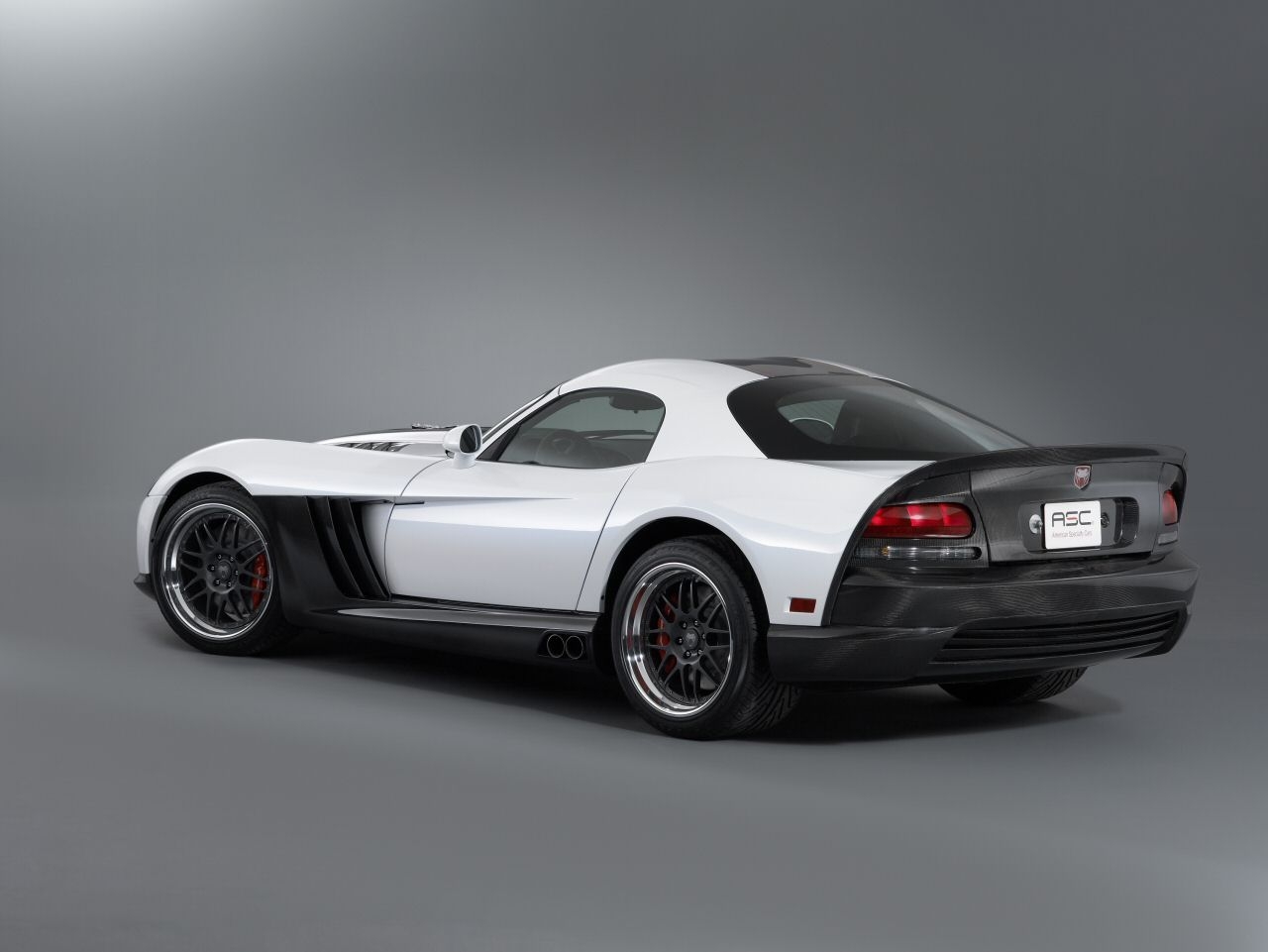
ASC Diamondback Viperz 2006


Auto Car | ASC Diamondback Viperz 2006 | The Dodge Viper is a V10-powered sports car made by the Dodge division of Chrysler. Production of the two seat sports car began at New Mack Assembly in 1991 and moved to its current home at Conner Avenue Assembly in October 1995. The car, and numerous variations, has made many appearances in TV shows, video games, movies, and music videos. The replacement for the fourth generation Dodge Viper formed the basis for the Mercedes-Benz SLS AMG. Although Chrysler considered ending production because of financial problems,[1][2] chief executive Sergio Marchionne announced and showed on September 14, 2010 a redesign of the Viper for 2012.[3]


The Viper was conceived as a historical take on the classic American sports car. The iconic AC Cobra was a source of inspiration, and the final version of the Viper bears this out with its powerful engine, minimalist straightforward design, muscular and aggressive styling, and high performances. Some saw claims to kinship with the Cobra as a marketing exercise, ignoring that Carroll Shelby was heavily involved in the initial design of the Viper, and subsequent design of the Viper GTS coupe. Notably, the later (1996 through 2002) Viper GTS coupe took a few design cues from the Pete Brock designed Shelby Cobra Daytona Coupe. Though the proportions seem similar at first glance, the designs are quite unique. Carroll Shelby was key in the development of the RT/10 as well as having a hand in the development of the GTS (Viper Coupe) model.


The Viper was initially conceived in late 1988 at Chrysler's Advanced Design Studios. The following February, Chrysler president Bob Lutz suggested to Tom Gale at Chrysler Design that the company should consider producing a modern Cobra, and a clay model was presented to Lutz a few months later. Produced in sheet metal by Metalcrafters,[4] the car appeared as a concept at the North American International Auto Show in 1989. Public reaction was so enthusiastic, that chief engineer Roy Sjoberg was directed to develop it as a standard production vehicle.Sjoberg selected 85 engineers to be "Team Viper," with development beginning in March 1989. The team asked the then-Chrysler subsidiary Lamborghini to cast some prototype aluminum blocks based on Dodge's V10 truck engine[citation needed] for sports car use in May.


Source : www.carpictures.com
Read More..

Dodge Avenger Concept 2006


Auto Car | Dodge Avenger Concept 2006 | Dodge is looking to spin the global D-segment with the all-new Dodge Avenger concept — a bold, styling statement that does away with the idea that a functional mid-size car is automatically boring. Avenger’s Dodge branded styling makes a definite statement in the D-segment, commanding attention and evoking attributes that define the Dodge brand: bold, powerful, capable and street smart.This Avenger concept, finished in a striking Inferno Red, will appeal to car buyers around the world who need the practicality, functionality and fuel efficiency of a mid-size sedan, but want more, including a vehicle with pizzazz that stands out and makes a statement. Avenger’s bold Dodge styling, innovative features and solid performance would allow them to do just that. The Avenger concept hints at the next-generation global D-segment vehicle from Dodge.


“This Avenger concept is another expression of where the Dodge brand is headed,” said Trevor Creed, Senior Vice President – Design, Chrysler Group. “Avenger brings Dodge brand American muscle car heritage into the global mid-size car segment. It does for the global D-segment what Caliber has done in the global C-segment — it offers a unique alternative to the competition.”From the front, there’s no mistaking the bold presence of Dodge’s heritage cues in Avenger’s crisp and edgy exterior design. Large, modern quad headlamps surrounded by black housings create the distinctive glare that forms Avenger’s face and surround the signature Dodge crosshair grille, which features body-color accents. Fog lamps are positioned in the outer corners of the front fascia and surround a diamond mesh texture that runs the length of the fascia. The lower fascia splitter is punctuated by two fairings. A stamped formation in the center of the hood carries the vertical lines of the crosshair grille.


Avenger’s side profile is distinguished by a long hood, short deck lid proportions with muscular rear shoulders and sleek rear spoiler. This concept’s long greenhouse is created by the use of a high-gloss black B-pillar and aerodynamic inspired rear door appliqués, which make this mid-size sedan look like it’s pouncing forward, even when it’s at a standstill. A strong character line stamped in the sheet metal accentuates Avenger’s chiseled profile.With its wide stance, lowered ride height and deep side sills, the Avenger concept is firmly planted on the road.


Nineteen-inch five-spoke painted Satin Silver wheels and all-season performance tires add to the Avenger concept’s sporty look. Deep red brake calipers gleam from the wheels. Body-color door handles and fold-away mirrors add to Avenger’s sport appearance, keeping the side profile clean and sharp.From the rear, the large, expressive taillamps placed at the corners frame the deck lid. A finely-tuned body-color spoiler is sleekly integrated in the deck lid. An integrated lower rear diffuser reduces drag and improves fuel efficiency. Chrome-tipped dual exhaust outlets communicate the performance capability of the Avenger concept’s 2.0-liter turbo diesel engine, which could be sold in markets outside North America.

Source : www.babez.de
Read More..

Dodge Challenger Concept 2006


Auto Car | Dodge Challenger Concept 2006 | The 2006 Dodge Challenger Concept vehicle is reminiscent of the powerful muscle cars of the 1970s. The 1970 model is one of the most highly sought cars for worldwide collectors. Consequently, the designers created this new model which retains the original vehicle’s acclaimed features. However, a distinct advantage is that the engineers and designers have used current technology to eliminate many of the design flaws such as the long front overhang and tucked-under wheels present in the original model. As the Vice President of Advanced Vehicle Design, Tom Tremont notes, “We wanted the concept car to evoke all those sweet memories…everything you thought the Challenger was, and more.”Car collectors will instantly recognize the classic design of the 2006 Dodge Challenger Concept. Designers retained the unusually wide front and back end that made the original 1970 Challenger so distinctive. In fact, they increased the new model’s front and rear by 65 and 65 inches. Adjustments to the front overhang were necessary to accommodate the new longer hood. In addition, the wheelbase has been increased by six inches to 116 inches, as well as two inches added to the width. This gives the vehicle a powerful no-nonsense appearance that collectors have always admired.


The clean lines of the original model were also retained in the 2006 version. For example, the bumpers are the same color and flush with the body of the vehicle and they contain no guards for a cleaner appearance. Other features such as the massive grille, oversize tires and bold graphics and colors that distinguished traditional American muscle cars were also retained.Although the Dodge Challenger features a classic design, many new features have been incorporated into the new model. Moldings are no longer required since the glass is set flush with the body panels of the vehicle. The rear quarter windows and windshield have also received an update, and the B-pillar has been removed to enhance the elegance and simplicity of the vehicle. The hood, front fenders and rear decklid are also much taller than the original 1970s model. Designers also placed the “thrust line,” the accent line that runs through the fender and door towards the rear wheel, higher on the body of the 2006 version.


The styling of the original “performance hood” will also be very familiar to Challenger fans. Although the twin diagonal scoops are still present, the new version includes functional butterfly-valve intakes that direct air into the engine. The exposed carbon fiber of the hood has been ingenuously painted to look like racing stripes. They highlight the innovative techniques that were used to fabricate this modern classic.Under the distinctive hood of the concept car, lies an impressive 6.1-liter V8 Hemi engine that produces 569.44 nm of torque. This powerful engine is capable of going 0 to 60 mph in as little as 4.5 seconds, and it can reach a maximum speed of 174 mph. A six-speed manual transmission backs the 425-horsepower engine.


Source : www.sport-cars.org
Read More..

Dodge Challenger Super Stock Concept 2006


Auto Car | Dodge Challenger Super Stock Concept 2006 | The Dodge Challenger is the name of three different generations of automobiles marketed by the Dodge division of Chrysler.The first car that carried the Challenger name was the limited edition 1959 Dodge Silver Challenger.This was a six-cylinder or V-8 model available only in silver paint and only on a two-door body. It came with many extra features at no cost, such as wall-to-wall deep pile carpeting, premium white wall tires and wheel covers, luxury fabrics and upgraded interior and electric windshield wipers.[1]


The first generation Dodge Challenger was a pony car built from 1970 to 1974, using the Chrysler E platform and sharing major components with the Plymouth Barracuda. The second generation, from 1978 to 1983, was a badge engineered Mitsubishi Galant Lambda. The third, and current generation, was introduced in 2008 as a rival to the evolved fifth generation Ford Mustang and the reintroduced fifth generation Chevrolet Camaro.


The Challenger was described in a book about 1960s American cars as Dodge's "answer to the Mustang and Camaro."[2] It was one of two Chrysler E-body cars, the other being the slightly smaller Plymouth Barracuda. "Both the Challenger and Barracuda were available in a staggering number of trim and option levels" and were intended "to compete against cars like the Chevrolet Camaro and Ford Mustang, and to do it while offering virtually every engine in Chrysler's inventory."[3] However, they were "a rather late response to the ponycar wave the Ford Mustang had started."[4] In his book Hemi Muscle Cars,[5] Robert Genat wrote that the Challenger was conceived in the late 1960s as Dodge's equivalent of the Plymouth Barracuda, and that the Barracuda was designed to compete against the Mustang and Camaro. He added that Chrysler intended the new Dodge as "the most potent ponycar ever," and positioned it "to compete against the Mercury Cougar and Pontiac Firebird." Genat also noted that the "Barracuda was intended to compete in the marketplace with the Mustang and Camaro/Firebird, while the Dodge was to be positioned against the Cougar" and other more luxury-type musclecars.

Source : www.carpictures.com
Read More..